Background
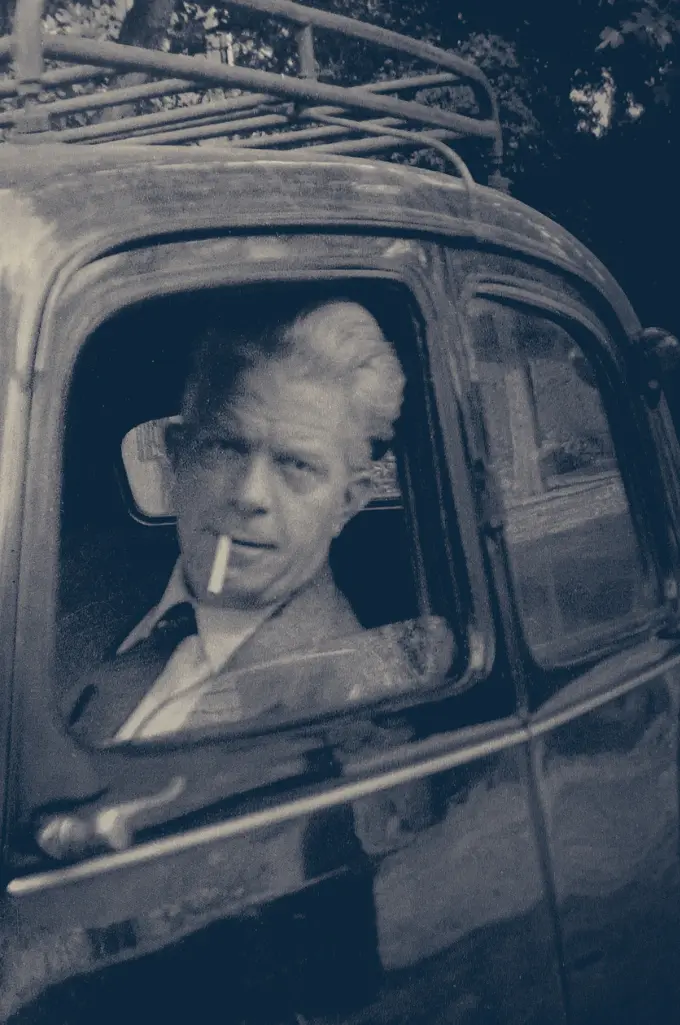
Born in 1903 into the artistic world of his father, Orientalist painter Albert Aublet, Félix Aublet spent his childhood between Neuilly and Tunis. Trained at the École des Beaux-Arts, he distanced himself early from traditional painting, embracing modernism, technology, and functional design. Influenced by Le Corbusier and close to avant-garde figures such as Robert Delaunay and Georges-Henri Pingusson, he developed a multidisciplinary career spanning painting, furniture design, interior architecture, advertising, cinema, and theatre set design.
Signature Style
Aublet’s work combines artistic rigor with technical innovation. Drawn to simplicity and functionality, he designed modular metal furniture and lighting with clean, modern lines, including the celebrated 1931 “boule lamp.” His interiors balanced utility and elegance, while his collaborations with Robert Delaunay within the “Art et Lumière” association explored the relationship between color, light, and monumental decoration. Throughout his career, Aublet maintained a strong interest in movement, modern materials, and visual experimentation.
Showstoppers
Among his landmark achievements are the interiors created in the 1930s for private apartments, hospitals, schools, and corporate offices, notably for the Compagnie fermière de Vichy and the Parisian Electricity Company. For the 1937 Exposition Internationale, Aublet and Delaunay produced monumental murals for the aeronautics and railways pavilions, bringing modern art into the public sphere. He later became highly sought after for theater and cinema set design and pioneered the concept of “rolling advertisement” campaigns for brands such as Cinzano. After an accident in 1959 left him paraplegic, Aublet returned fully to painting.