We often think of locations as beautiful backdrops. At Villa Empain, the setting is the protagonist.
In this new photographic series devoted to the Doucet collection, its marble halls, rare woods, monumental proportions and intricate metalwork do more than frame the furniture: they establish a conversation across almost a century of decorative culture. The result feels like a temporary gathering of one collector’s world with another. Commissioned by Baron Louis Empain from Swiss-Belgian architect Michel Polak in 1930, Villa Empain was conceived at a moment when Brussels was embracing a particularly sophisticated form of Art Deco. Polak combined the sumptuous materials associated with the style with an architecture of striking restraint: symmetrical volumes and clear lines set against polished stone, precious timber, metalwork and glass. Among the materials used were Baveno granite, Escalette and Boisjourdan marbles, rosewood, walnut and exotic woods; even the window surrounds incorporated gold leaf. Behind the house, a large swimming pool introduced another distinctly modern note. The villa’s subsequent life was considerably more turbulent. In 1937, Empain donated it to the Belgian State with the intention that it become a museum of contemporary decorative arts. The Second World War interrupted that project: the building was requisitioned during the German occupation and later used as the Soviet embassy. Returned eventually to the Empain family, it subsequently housed exhibitions and, from the 1970s, the offices of RTL. By the end of the twentieth century it had fallen into neglect, suffering vandalism and partial destruction. The Boghossian Foundation acquired the property in 2006, undertook an extensive restoration, and reopened it to the public in 2010 as a centre for art and intercultural dialogue; the restoration received a Europa Nostra award the following year.


It is difficult to imagine a more appropriate setting for a collection bearing the name Jacques Doucet.
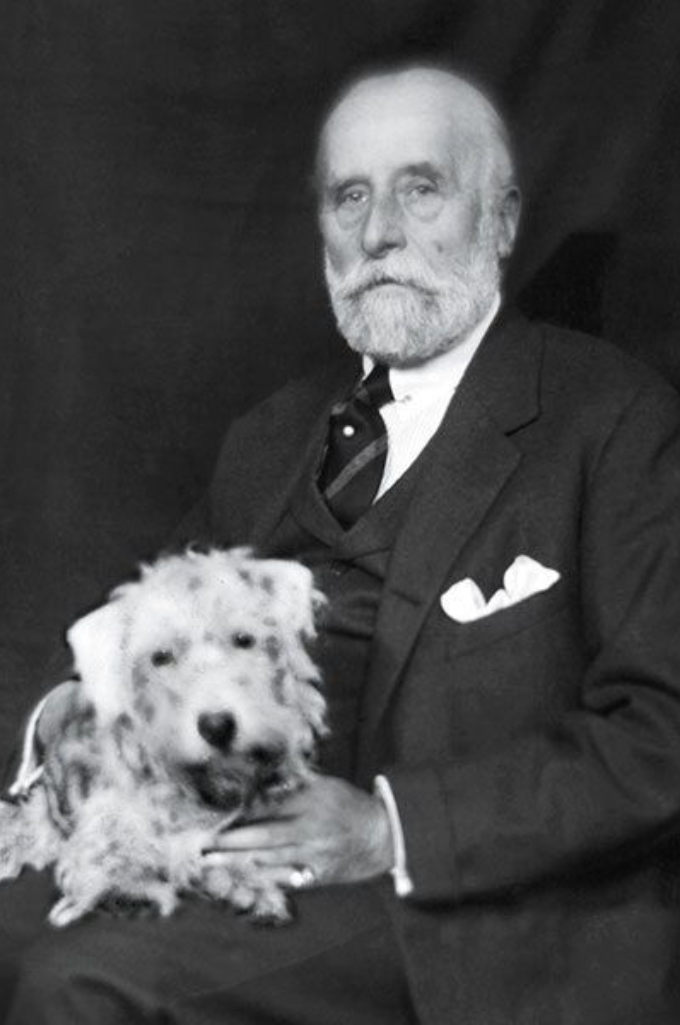
Doucet, born in Paris in 1853, is remembered as one of the pioneering couturiers of the Belle Époque, but his importance extended far beyond fashion. He was an exceptional collector and patron whose interiors became laboratories for the emerging modern decorative arts. His early passion was eighteenth-century French art, but after selling that collection in 1912, he turned decisively towards the avant-garde. He collected modern European painting alongside African and Asian art and, unusually for the period, approached fine art and the decorative arts as parts of the same creative universe. His eye was formidable. Doucet acquired works by Picasso, Braque, Matisse and Picabia, and famously owned Picasso’s Les Demoiselles d’Avignon. At the same time, he commissioned some of the most adventurous designers of his generation to create furniture and interiors specifically for him. His apartment at 46 Avenue du Bois featured works by Paul Iribe, André Groult and Pierre Legrain; later, at 33 rue Saint-James in Neuilly, a private studio-gallery designed with architect Paul Ruaud and Pierre Legrain brought contemporary painting, African art and bespoke furniture together in a single environment.

This history matters when looking at the present Doucet collection, designed by Garcé Dimofski. Inspired by Doucet’s taste and spirit, the collection translates something of his approach to interiors into a contemporary vocabulary. Sculptural forms, generous curves, architectural silhouettes and richly worked surfaces are combined with materials such as chestnut, natural oak and shagreen, alongside textiles by Lesage Intérieurs and Dedar. The intention is not to reconstruct the 1920s but to reinterpret the language of Art Deco through a contemporary lens. At Villa Empain, that idea becomes particularly clear. The rounded Spontini Sofa sits against the villa’s disciplined geometry; the compact Avenue du Bois armchair appears almost architectural in the intimacy of a marble-lined room. The Saint-James chairs and Otero table inhabit a wood-panelled dining room with an ease that makes the distinction between historic architecture and contemporary furniture momentarily disappear. Elsewhere, the dark chestnut and shagreen of the Poiret console introduce a sharper, more graphic note against Polak’s richly veined stone. The names themselves quietly evoke the cultural landscape surrounding Doucet, but it is the philosophy behind the objects that creates the strongest connection. For Doucet, furniture was never merely functional: the room was conceived as an ensemble in which art, objects, textiles and architecture intensified one another. The Villa Empain was born from a comparable belief in the interior as a complete composition.


Photographed by Ricardo Sousa Nunes and Paula Yubero, with image art direction by Célia Cotelle, the series captures precisely that affinity. Rather than indulging in period nostalgia, it proposes continuity: craftsmanship passed forward, historical references absorbed rather than copied, and furniture conceived once again as part of a larger cultural environment. As the photographs suggest, the most persuasive way to revisit Art Deco may not be to recreate its past, but to allow its ideas to live today in our homes.
Discover the Jacques Doucet Collection available exclusively through Invisible Collection.