For lovers of poetry, Hugo Drubay’s new piece may resonate with the lines of Keats: “Beauty is truth, truth beauty,—that is all / Ye know on earth, and all ye need to know.” Yet even for those less enchanted by verse, there is joy in discovering the latest creation by the French designer. Supported by the Bettencourt Schueller Foundation, Drubay has reimagined the famed Medici Vase through a contemporary lens. This emblematic example of neo-Attic art, dated to around the 1st century AD and currently housed in the Uffizi Gallery in Florence, is a monumental marble krater celebrated for its intricate bas-relief of a Bacchic procession. It is widely regarded as a paragon of classical art—epitomizing the grandeur of Greco-Roman craftsmanship—and has long served as a source of inspiration for Renaissance and Neoclassical artists, architects, poets, and designers.
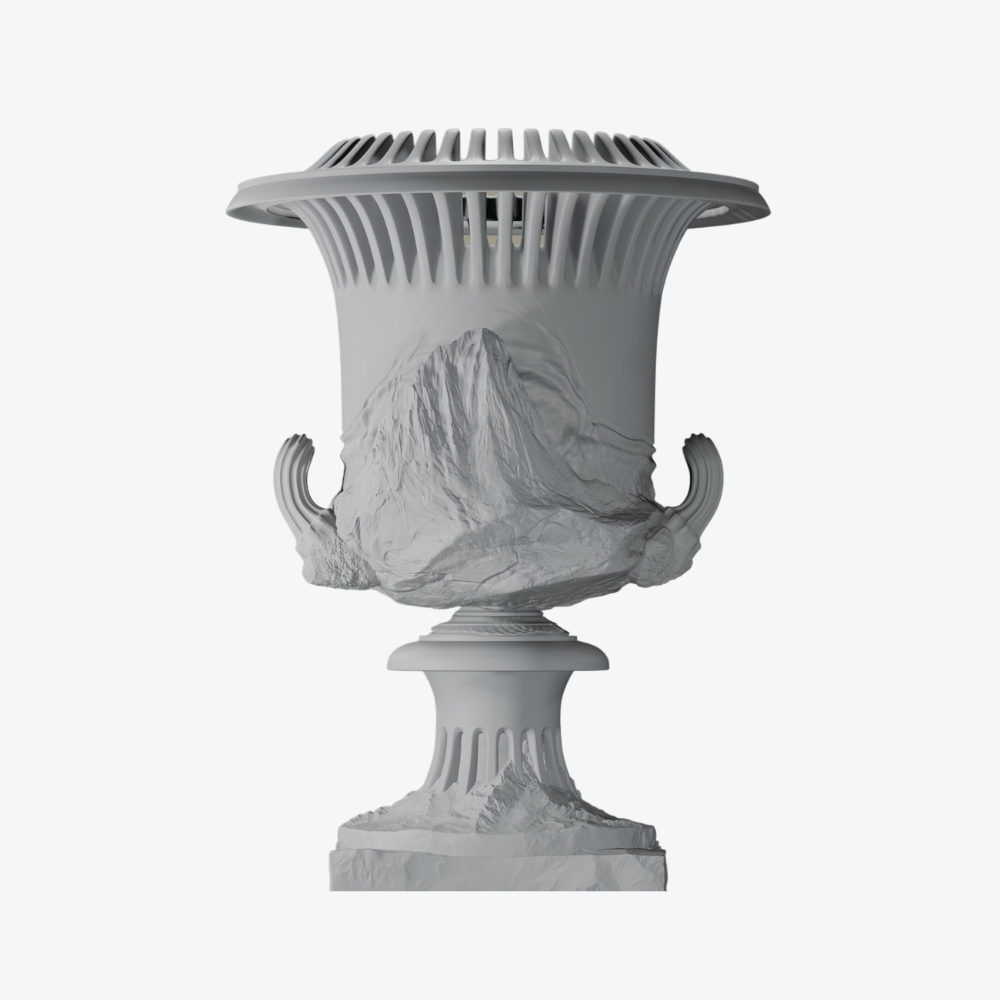
Originally acquired by the Medici family in 1598, the vase was first displayed in their Roman villa and later moved to their Florentine palazzo, where it remained until the late 18th century. Over the centuries, the Medici Vase inspired numerous copies intended to adorn the gardens and salons of Europe’s elite—from Versailles to Kew Gardens to Castle Howard (yes, that very castle featured in Bridgerton). Rather than replicate the original, Hugo Drubay pays homage by creating a bold reinterpretation—digitally sculpted, engraved, and crafted in plaster, then gilded with gold leaf. This singular sculpture will be installed in the gardens of Villa Medici, while a limited edition of eight vases will be available exclusively through Invisible Collection.

Built over ancient Roman ruins during the early Renaissance, Villa Medici has undergone numerous transformations. It was acquired in 1576 by Ferdinando de’ Medici, who commissioned leading artists of the day to expand and embellish the estate. For over 150 years, it was a center of political intrigue and intellectual exchange—Galileo Galilei was both a guest and, soon after, a prisoner within its walls. When the Medici bloodline ended, the villa passed to another noble family before being officially purchased by Napoleon in 1803. Since then, it has served as the seat of the French Academy in Rome, and remains an extraterritorial outpost of French culture in the heart of Italy.
Today, under the auspices of the French Ministry of Culture, Villa Medici hosts artists, writers, musicians, designers, and scholars in a residency program that encourages creative freedom and experimentation. Among its recent residents is Hugo Drubay, whose time there led to the creation of the Medici Vase—soon to be unveiled as part of the art festival “Reenchanter la Villa.”
We spoke with Drubay about the vase, the creative process, and what drew him to reinterpret a 2,000-year-old icon.

Why did the Medici Vase leave such a lasting mark on the collective imaginary, and on culture tout court?
It became iconic because, when artists toured Rome and Italy to visit the dreamed-of Antiquity and draw inspiration from the origins of Western civilization, this was one of the vases that, due to its proportions, was greatly admired and copied—especially by Louis XIV, who commissioned two sculptors—Hurte[l] and Simon (though their names aren’t that important)—to copy it in Rome and place it in the gardens of Versailles. You can still see a few examples of similar size and interpreted proportions. So, it represents a kind of French excellence, since it was highlighted by Louis XIV.
From the late 17th century, artists like Fragonard and Boucher studied the vase closely and made many red chalk drawings of it, as did many 18th- and 19th-century artists.
There were also many different versions made by the Royal Sèvres Manufactory during the 18th century, and Madame de Pompadour had a pair in her apartment.
In the 19th century, since it came to represent the idea of idealized Antiquity as well as power—first through Louis XIV and later through a broader Greco-Roman ideological aesthetic—it became a staple in bourgeois homes, either as a garden element or as decorative sculptures on interior consoles.

You’re saying it became a sort of signifier?
It became a kind of the iconic vase of European chic, found in both the English and French aristocracy, as well as the bourgeoisie.By the late 19th century, it entered a phase of more industrial reinterpretation. It was produced more serially, using more standard materials like cast iron and bronze. Eventually, since it became a code of excellence and aristocratic taste, it ended up in many gardens—even among people who didn’t know its history—because it had become culturally important.

Originally it was a multipurpose vessel, functional and symbolic at the same time…
It’s worth noting that in Antiquity, it was a vase placed in both gardens and inside Roman buildings. It’s an Attic-style vase from the 1st century AD (not BC), referred to as “neo-Attic,” meaning it combines various Greek styles. It was made in Greek marble, by Greek artisans, but on commission from the Romans for garden use. It would have held either flowers or water—like a fountain—symbolizing the krater, or wine-mixing bowl, as it is, in fact, a krater. In Greco-Roman banquets, the krater was used to mix wine and reach a certain ecstasy or divine frenzy, connecting with the gods through everyday ritual. So the vase remains symbolic. It isn’t functional—it’s a sculpture that embodies this Dionysian sense of theatricality. It also tells a story, perhaps of Iphigenia (it’s open to interpretation), possibly based on a Homeric tale. The idea is that by walking around the vase, you can read the story—a bit like the origin of cinema. It’s like the first version of the cinematic diorama.
It also, of course, represents Greek architecture, as it’s entirely built according to sacred geometry—the foundational principle behind the construction of ancient temples.

What is your connection to the Medici Vase?
I believe that in Greco-Roman antiquity, people had a deeper connection—with themselves, with the divine, and with alternate realms. There was a much stronger belief system in place.
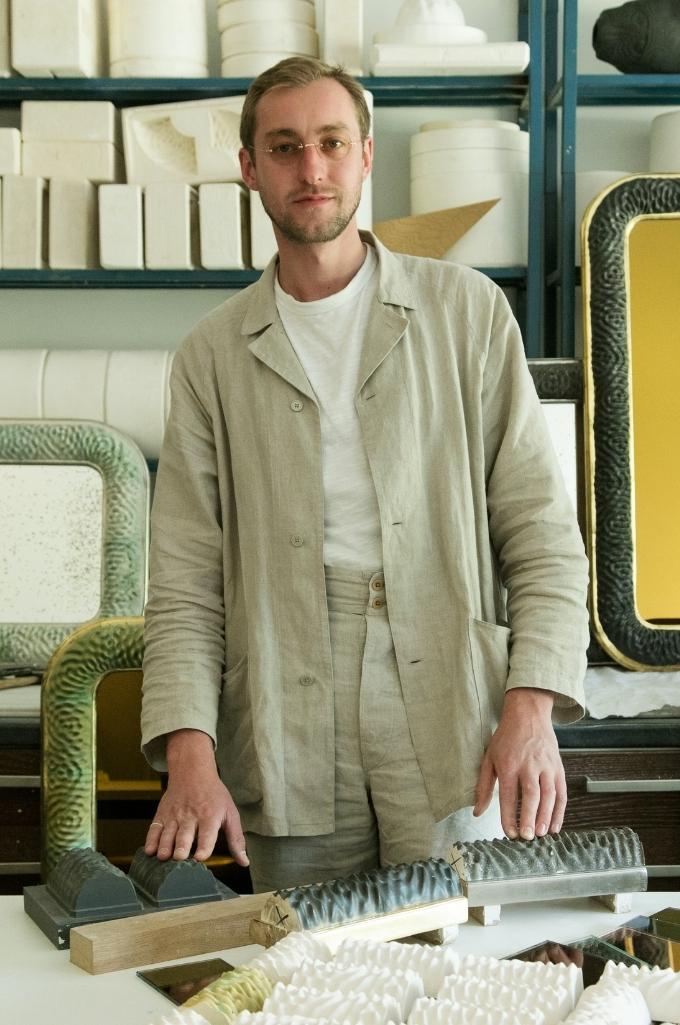
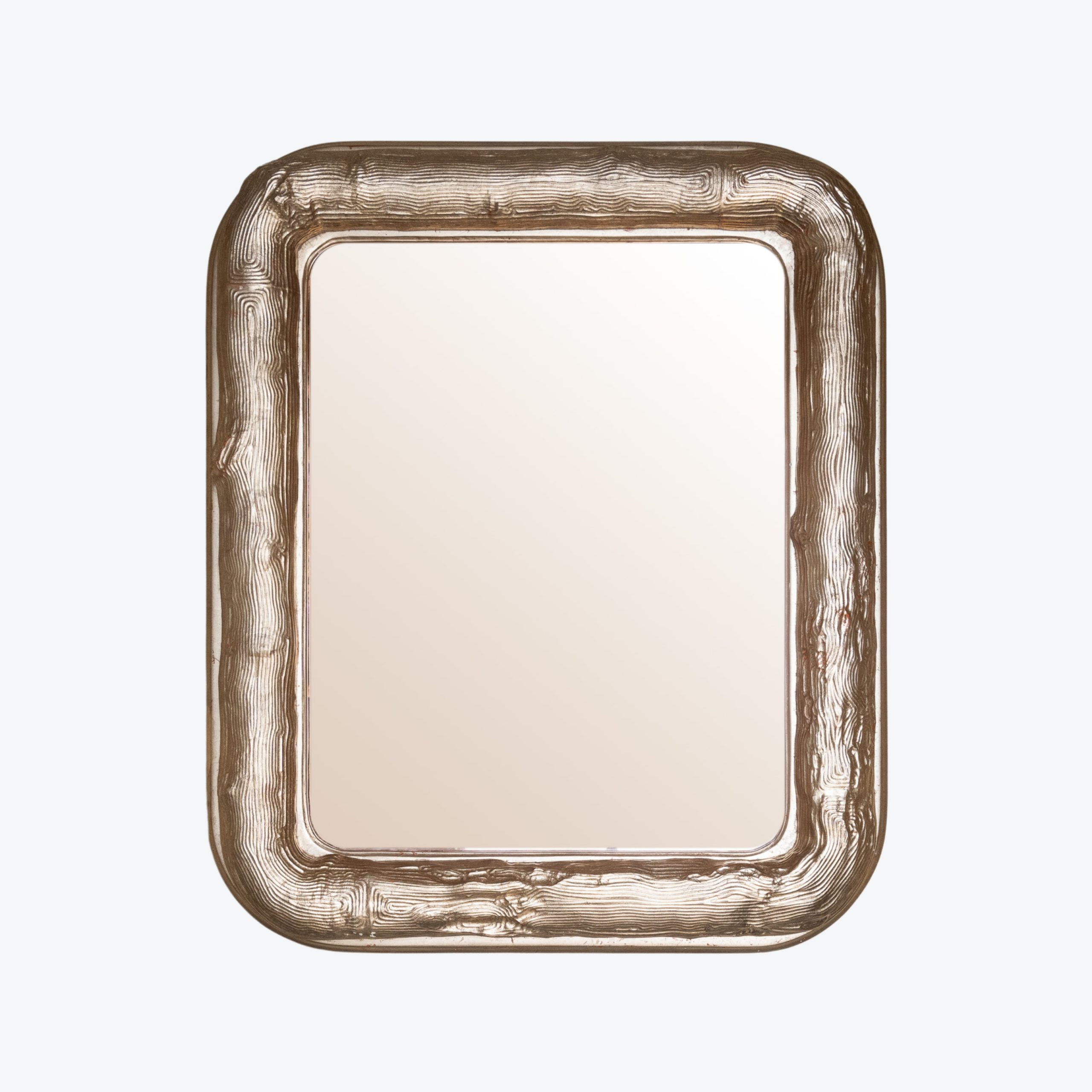
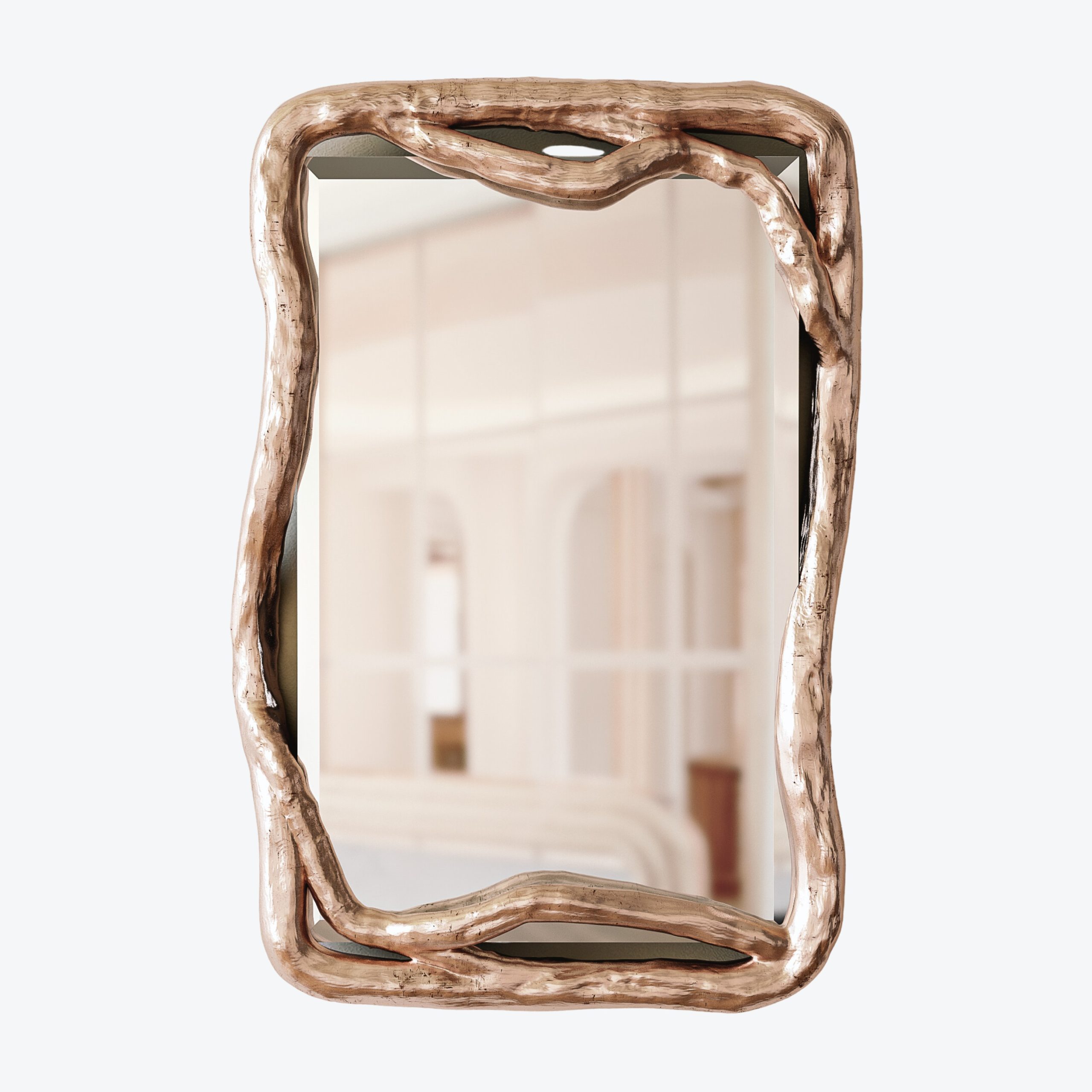
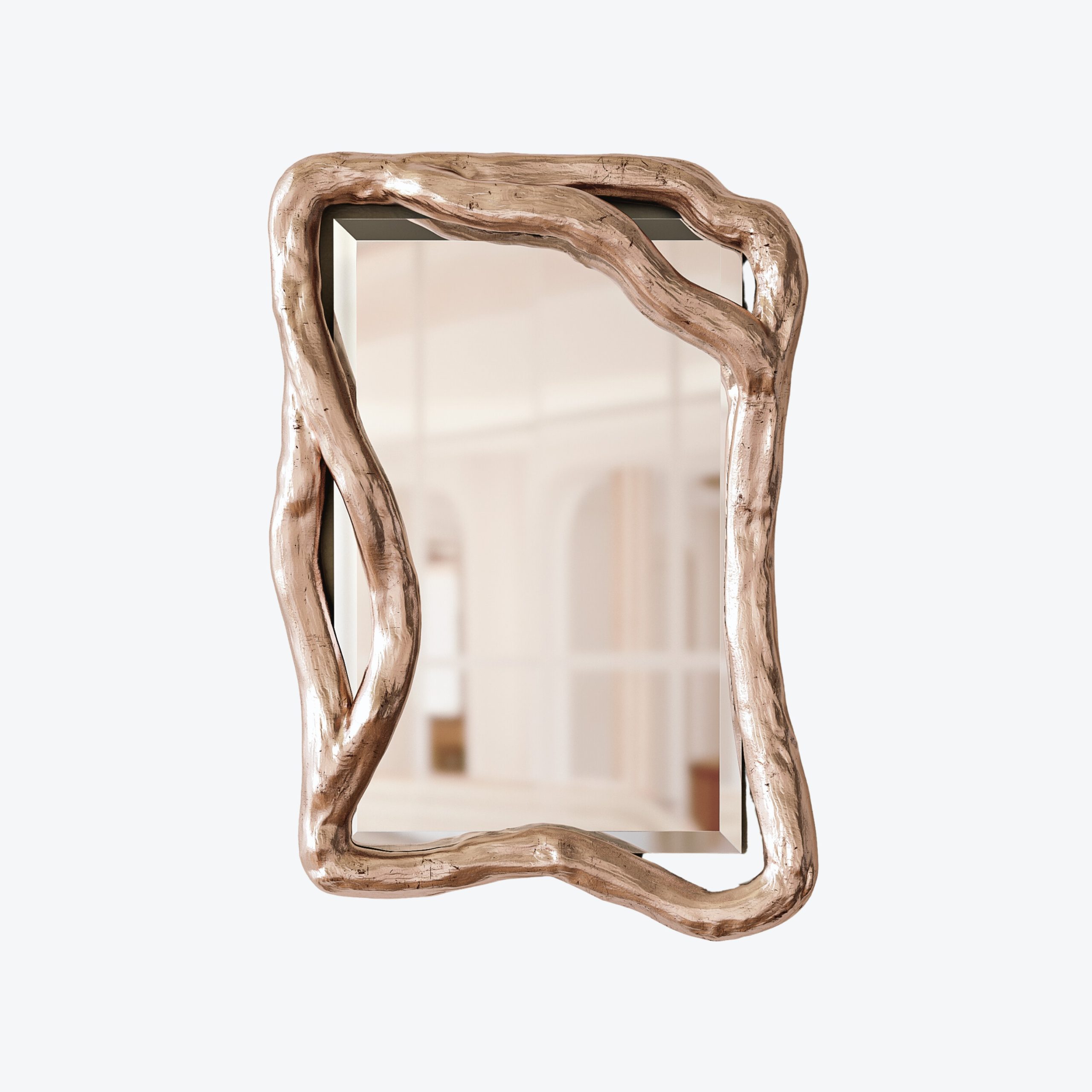
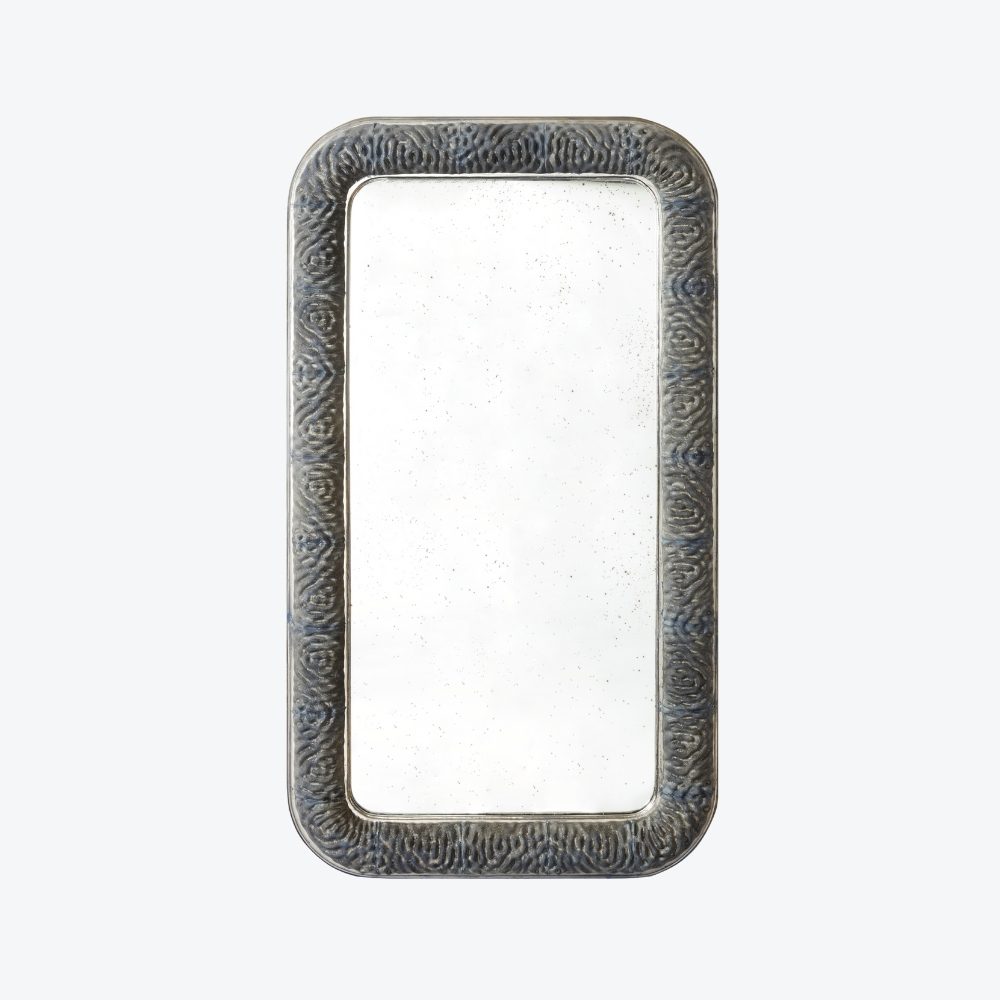
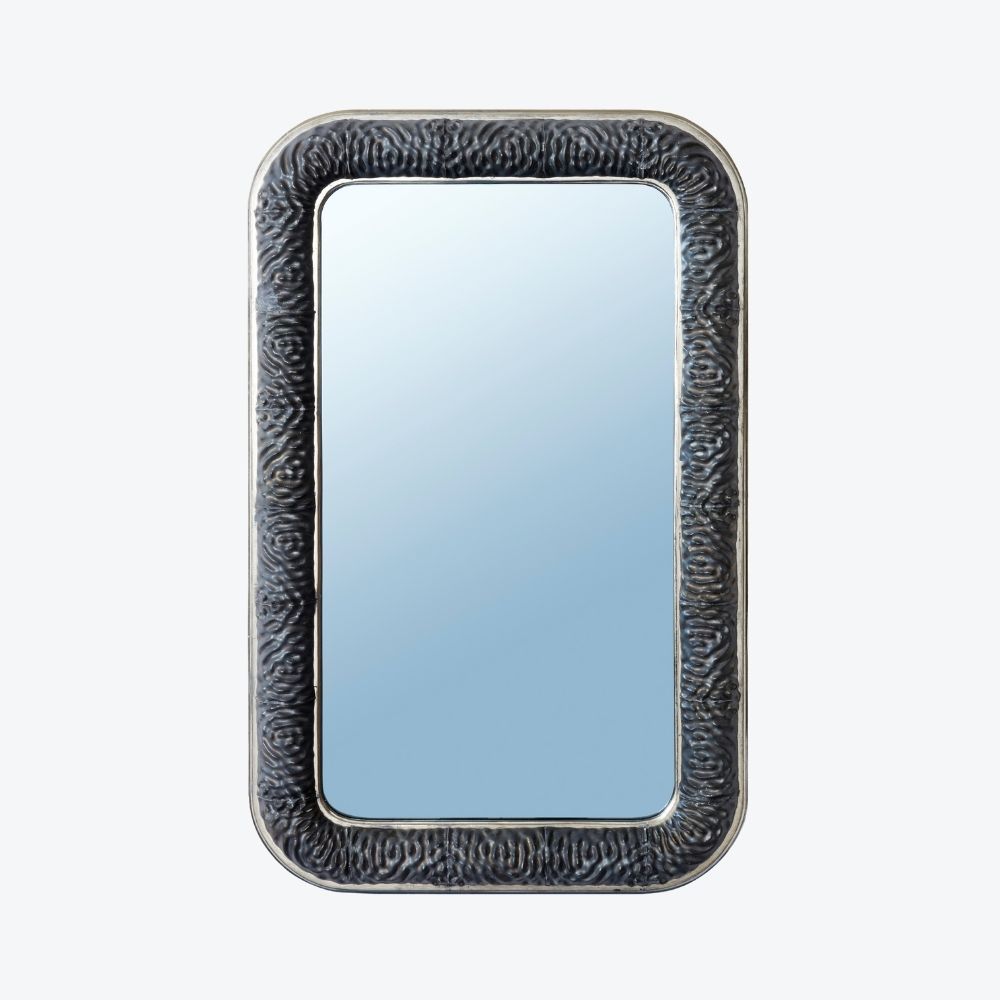
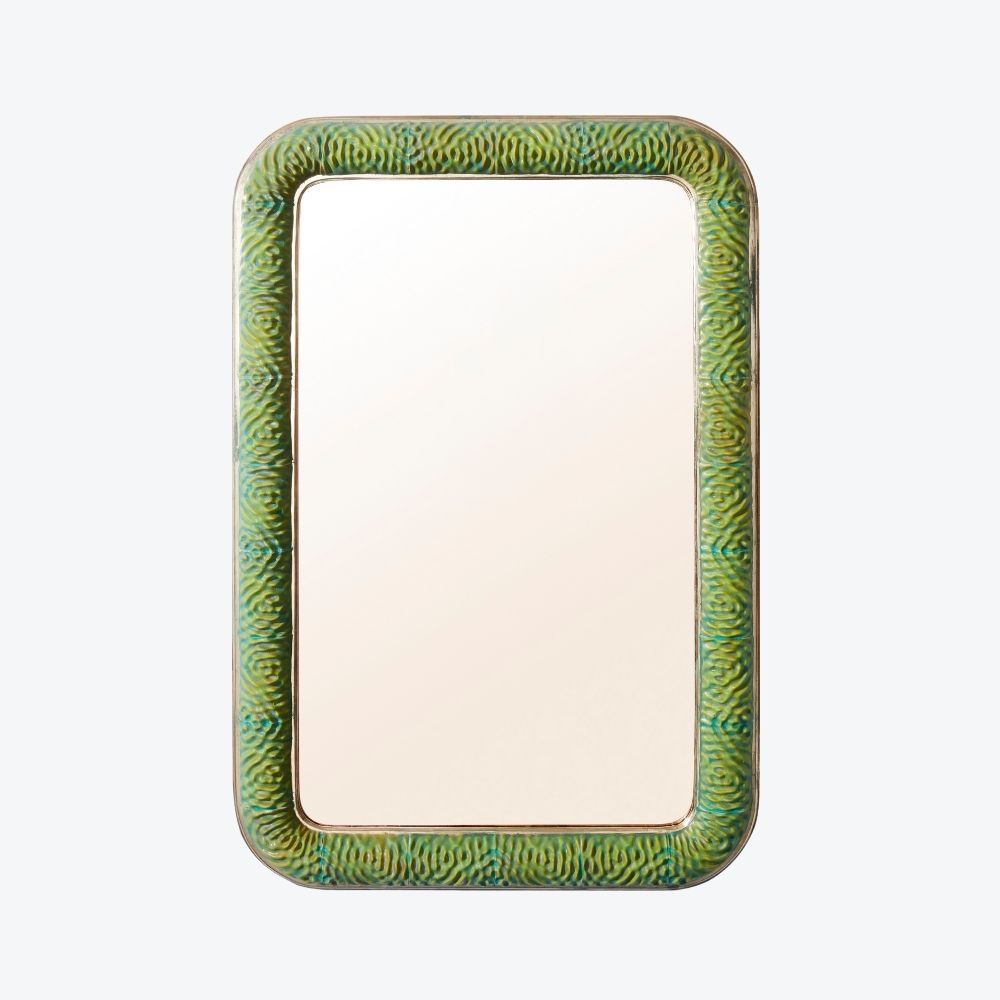
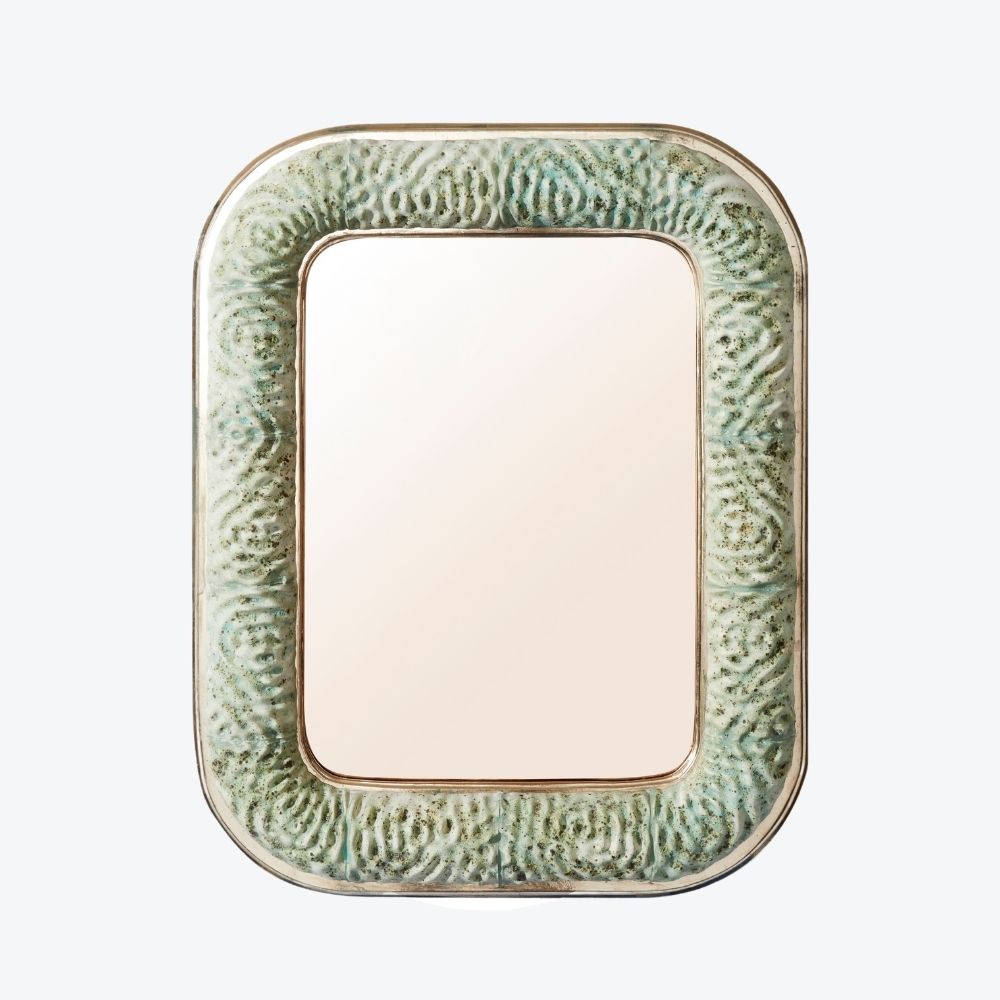
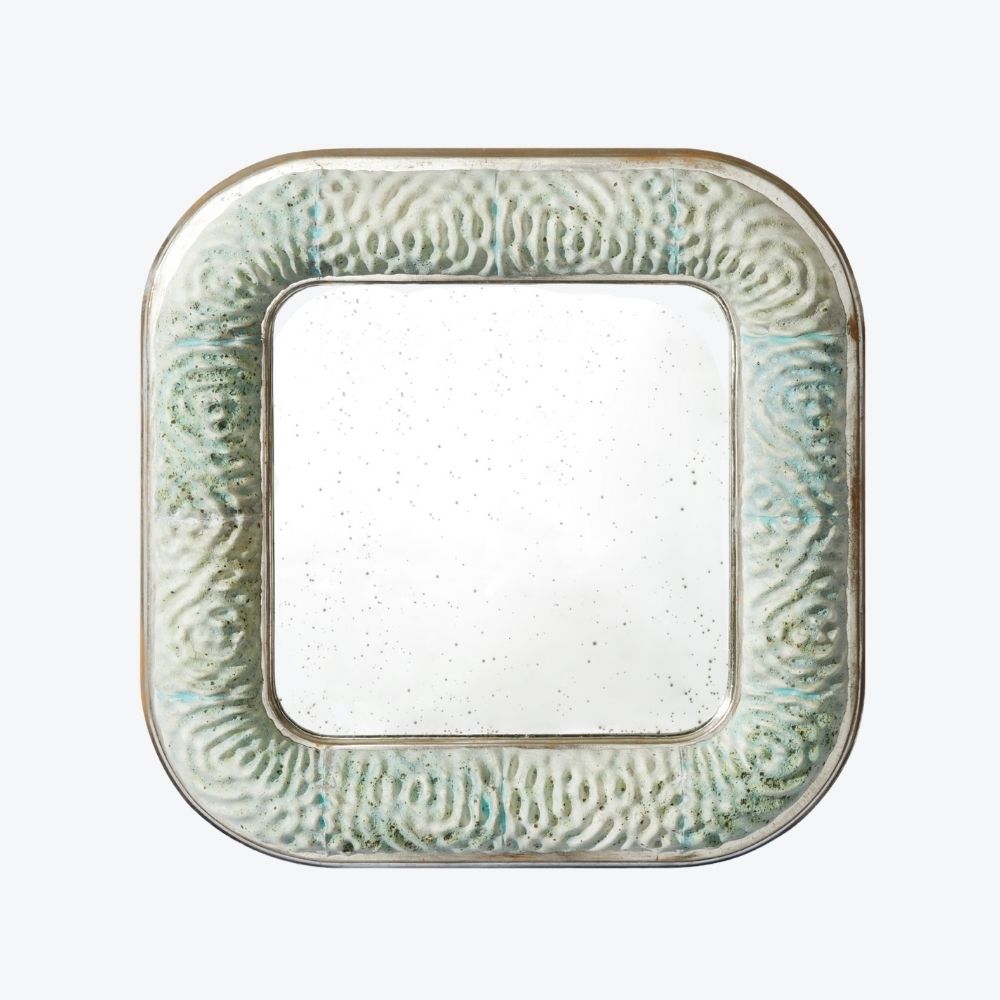
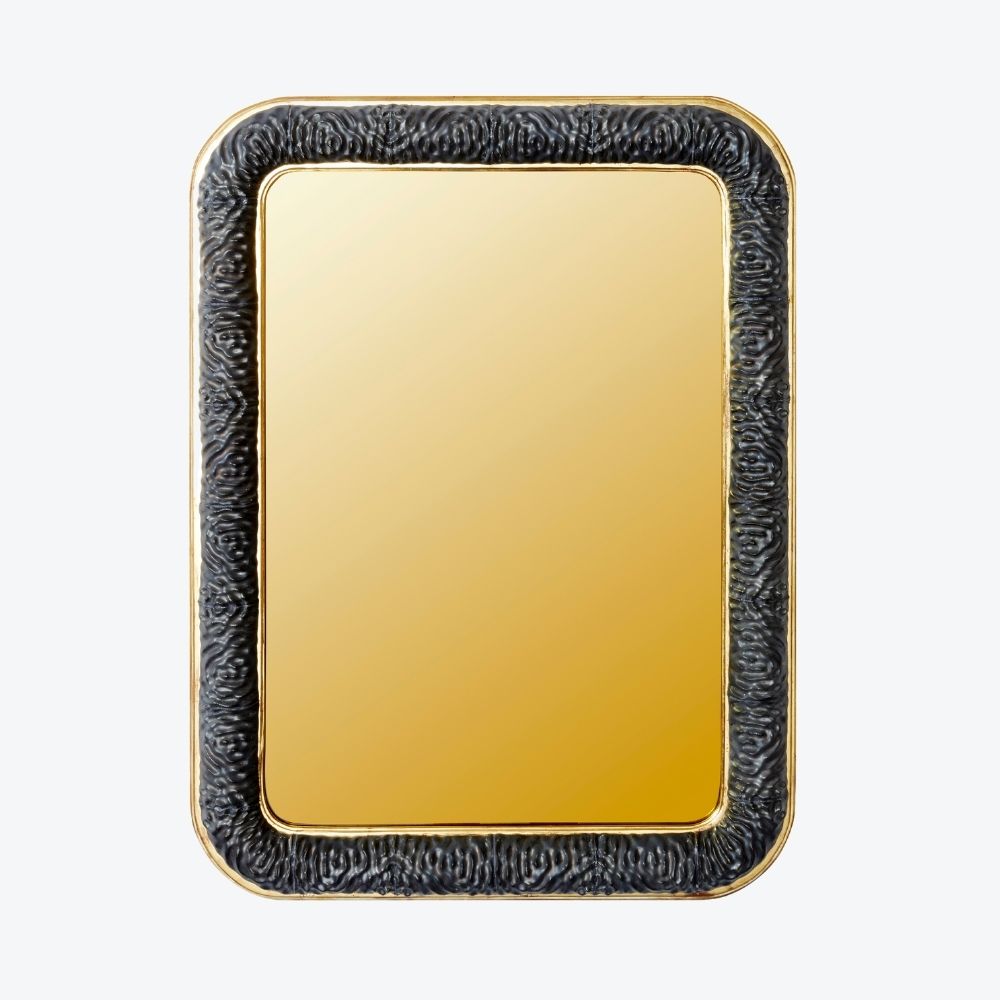
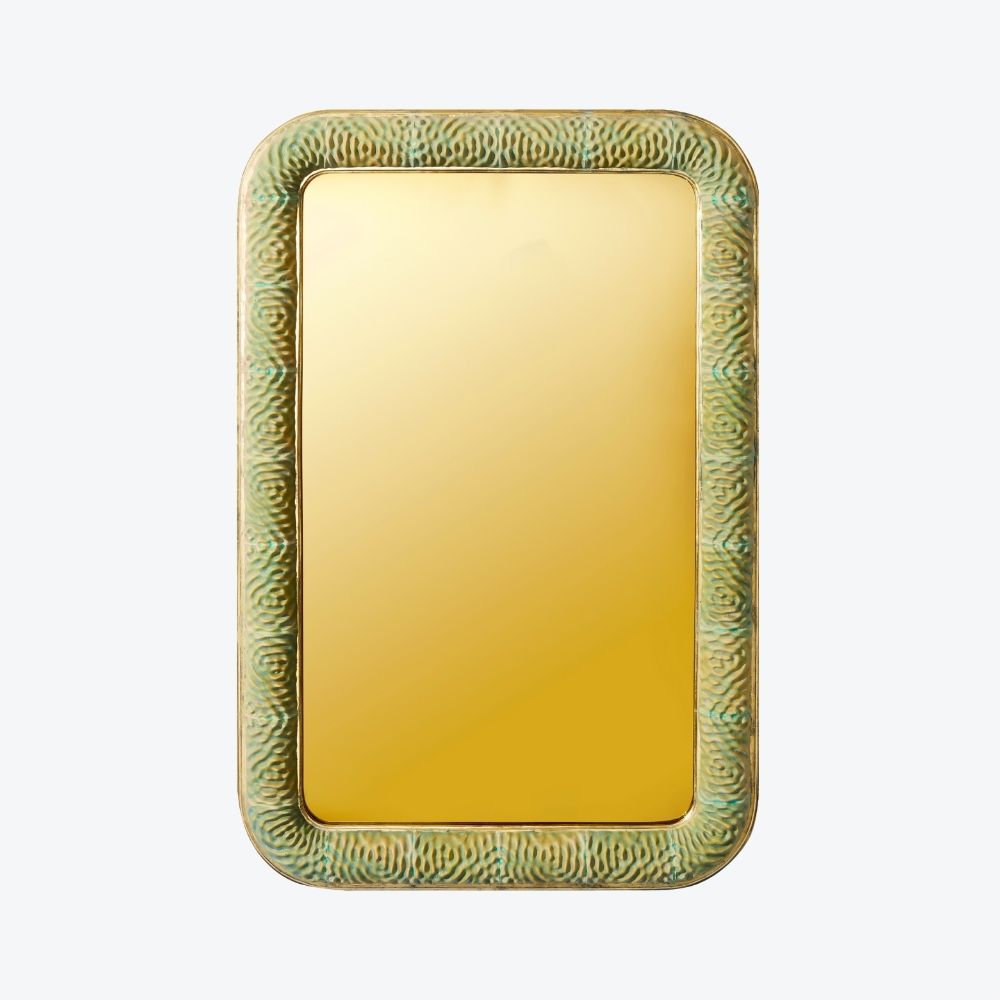
In all my work, whether it’s the Rocaille mirror collection or the Osaam collection, my desire is to connect to a certain form of natural mysticism, to perceive slightly altered realities. Through beauty, through the contemplation of nature, and through structures inspired by sacred geometry — as seen in ancient temples — I aim to access a sensitivity that transcends the human condition.
That’s the connection I’m interested in: how I could learn from antiquity through this reinterpretation. It was a study of the ancient world — a way to draw on knowledge that could inform my future creations. And that’s exactly what happened. In contemplating the original Medici Vases, I discovered so many small subtleties — insights that will influence my upcoming collections, including those with Invisible Collection, which will reflect the research I’ve carried out.

How was this magnificent reinterpretation born?
This reinterpretation was born during a residency I undertook in February 2024 at the Villa Medici. The vase was imagined specifically for this place, echoing its architecture and history.
I spent a month immersed in the Villa’s atmosphere—studying antiquity, exploring the history of the building, and absorbing the spirit of both Italy and the Villa Medici itself.
The project came to life thanks to the support of the Bettencourt Schueller Foundation, a prestigious organization that supports craftsmanship in France, their support was instrumental in bringing this work to fruition. A word about the French Academy at Villa Medici: it’s an institution founded under Louis XIV, historically known for awarding the Prix de Rome. This prestigious prize allowed young artists—whether sculptors, architects, painters, or musicians—to study in Rome for several years. In return, they produced works to enrich the national collections. Sculptors, specifically, would create moulds directly from ancient sites and bring plaster casts back to France. The Villa still holds an extraordinary collection of these antique casts. My reinterpretation of the Medici Vase follows in this lineage.

Tell us more.
To begin the project, I travelled to Florence to see the original vase. I took over 600 photos and, using photogrammetry, created a highly accurate 3D scan—capturing the vase’s harmonious proportions and sacred geometry with utmost fidelity. Unlike sculptors from the 17th century, who lacked such tools and had to rely on limited references, I was able to work directly from a precise digital model. Throughout the residency, I also drew inspiration from the surrounding landscape. The Villa Medici sits at the threshold between city and countryside, with panoramic views of Rome and a mountain range just behind. This duality—between nature and culture—deeply influenced me.
I wanted to honour antiquity while also reflecting nature, much like the ancients did, but through the lens of contemporary technology. I scanned natural elements—tree trunks, rocks—and digitally sculpted and modelled them to shape the vase. A vital part of the process was also the study of sacred geometry: understanding the internal harmony of the vase through the golden ratio, a universal measure of beauty found in both art and nature.

Will there be more than one vase?
I created two versions: One, finished in a rose champagne gold, will be permanently installed at Villa Medici. The other will be produced in a limited edition of eight limited, available exclusively through Invisible Collection.

The original vase was made of marble. Why did you choose plaster?
You are right, originally, the Medici vase was made of marble—Greek marble, to be precise. I chose plaster for historical reasons. In the 18th and 19th centuries, the students who went to Villa Medici were inspired by Antiquity; they would cast antique sculptures to learn through the act of moulding.
By moulding, one analyses the details much more closely, since the piece has to be made in several parts to be removed from the mould. So, it’s a way of studying Antiquity and continuing the historical lineage of the students of the Villa Medici—reconnecting with its golden age, particularly during the era of the Prix de Rome for sculptors and architects.

Do you enjoy working with plaster?
What I find interesting about plaster is its relation to my creative process and technique—you can also see this, for example, in my Rocaille mirrors, which are made from a plaster mould. That is to say, plaster can capture the imprint of living things, rocks, nature—and also sculpture—with great fidelity. And today, we’re lucky enough to have access to 3D printing. So, I was able to create my vase at full scale using 3D printing. Then, the workshop Staff Espace Volume used that 3D-printed plastic model to create various parts of the matrix and cast them in plaster. What’s wonderful is that this makes it reproducible—just like the students of the Villa Medici, whose purpose was to reproduce in series for educational use. That same idea is at work here: to make this reinterpretation available for the future, so that it doesn’t remain fixed in one place, but can be shared—so everyone can experience it. Also, it’s possible to produce a resin-treated version so the piece can be displayed outdoors. That means it becomes weather-resistant—an invisible enhancement. Basically, we can make a resin-coated version of the Medici vase for outdoor use, just like it would have been in Antiquity. And there’s also the option for different gold finishes—rose gold, white gold, or yellow gold. These are done with the same traditional gilding technique used at Versailles.

What conversations or emotions do you hope the piece will evoke?
Well, quite simply, the contemplation of the surrounding nature, capturing the present moment, attaining a kind of state that surpasses reality in order to be even more rooted in it. I believe that’s the foundation of art, in a way. Because it represents mountains, it represents nature—and what’s also interesting is that the top of the vase is openwork, allowing sunlight to pierce through and create beams of light across the landscape. As the day progresses, the sun will cast a rhythm of light across the mountain. And when you move around the vase, you can perceive different aspects of the landscape. So it’s a shifting landscape, a bit like Chinese dream stones, you could say.
Well, quite simply, the contemplation of the surrounding nature, capturing the present moment, attaining a kind of state that surpasses reality in order to be even more rooted in it. I believe that’s the foundation of art, in a way. Because it represents mountains, it represents nature—and what’s also interesting is that the top of the vase is openwork, allowing sunlight to pierce through and create beams of light across the landscape. As the day progresses, the sun will cast a rhythm of light across the mountain. And when you move around the vase, you can perceive different aspects of the landscape. So it’s a shifting landscape, a bit like Chinese dream stones, you could say.
That is to say, you can find nature and landscape in all the surrounding forms—whether in the clouds, the rocks—and there’s a connection between the microcosm and the macrocosm, between what’s above and what’s below. There’s also another dimension, of course: connecting to the divine, to history, to myth, and elevating the soul. It’s a bit mystical, but that’s how I work, that’s the feeling.

As you mentioned earlier there is this also an idea of status…
Well, we must admit it, there’s a sense of power. It’s an iconic vase because of what it symbolizes. It evokes Versailles, Louis XIV, the aristocracy, the ancien régime of the 18th and 19th centuries—those great noble families who had to own a Medici vase or antique elements in order to assert their place in society. And having this vase—especially since it’s large and masterfully made—gives it a stately presence. It’s a way of showing one’s intellectual refinement through a connection with history. If it’s finished in gold, to me, it becomes an energy collector. If placed outdoors or even by a window, the gold surface will reflect and scatter golden glimmers throughout the space. Because of its cylindrical shapes, it inevitably creates undulating effects on the walls and floor, casting a golden, luminous atmosphere like a mirror—that’s what I often work with. That’s why I make rose-tinted mirrors, to give the skin a pale and flattering tone, you could say… a good complexion. And the golden bursts around my mirror frames act like a trim or outline…
Well, now I’m rambling. Let’s leave the mirrors for another conversation!