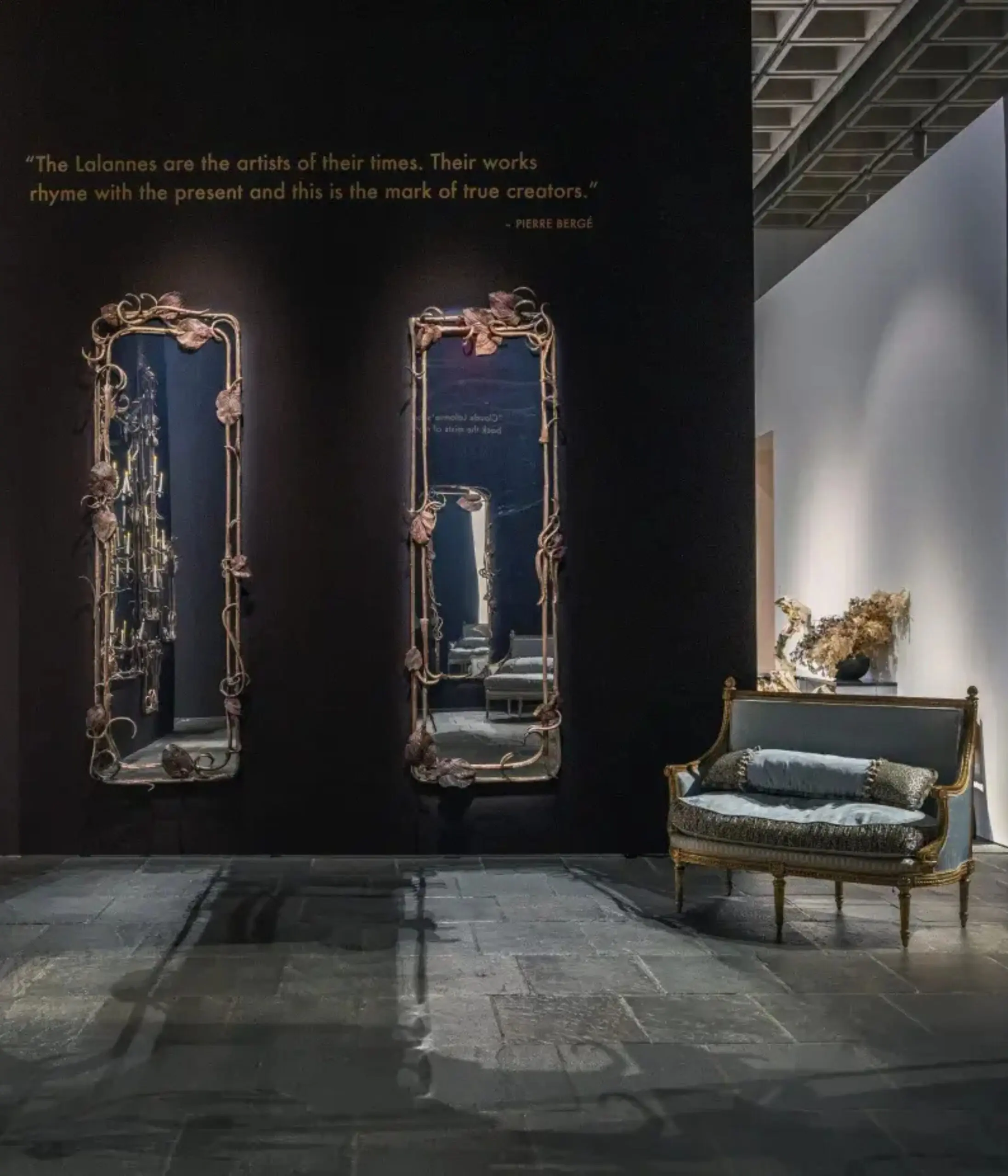
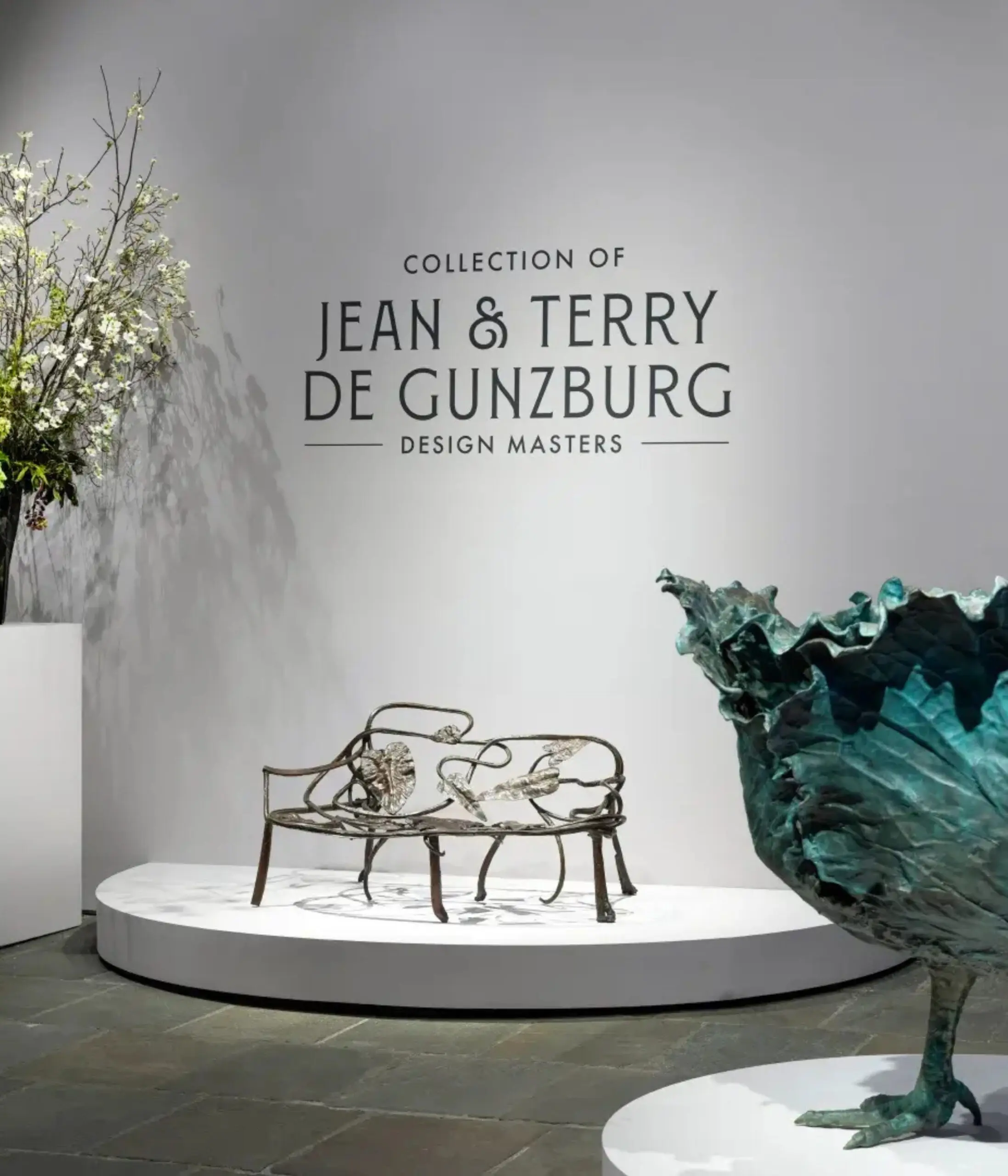
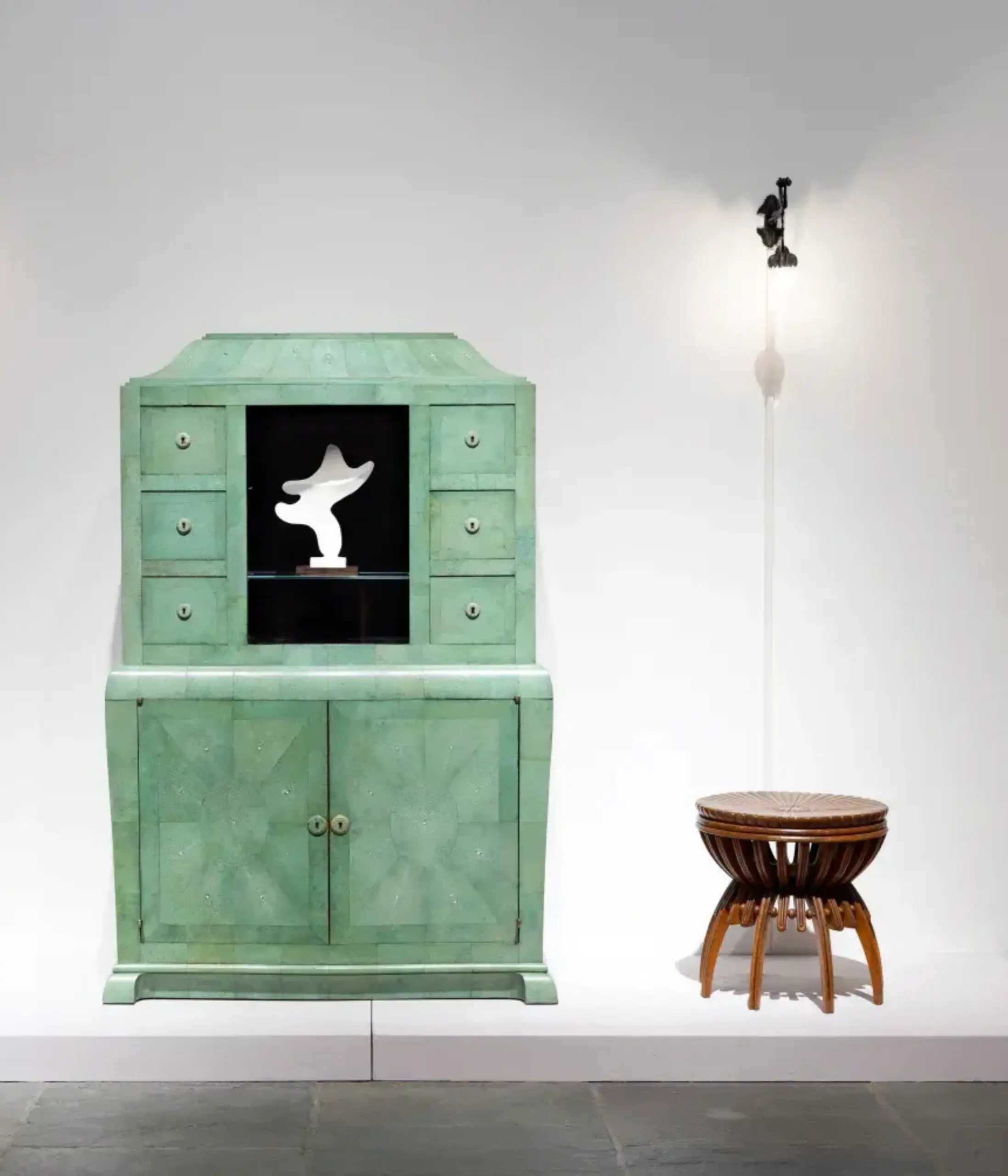
A few weeks ago, the market for collectible design found a new benchmark, set at Sotheby’s in New York. Much anticipated among connoisseurs, the sale of the collection of Jean and Terry de Gunzburg was expected to fetch high prices considering its quality, but nobody would have guessed such stellar results, topped by a few auction records. Take Claude Lalanne’s Ensemble of Fifteen Mirrors for Yves Saint Laurent and Pierre Bergé, commissioned by the couturier in the seventies: the leafy bronze, galvanized copper and mirrored-glass installation was estimated at $10–15 million and sold for $33.45 million, setting a record for Claude Lalanne and, most importantly, for a work of design at auction. The bidding fever raged on when a rare, beautifully crafted shagreen cabinet designed by André Groult in 1926 sold for $2.2 million. More familiar names to auction-goers, like Jean Royère, Pierre Chareau and Jean-Michel Frank, were comfortably sold above the six-figure mark. The big takeaway from this record sale, beyond its $96 million result, is the strong message it sent to the world of collecting: the enduring appeal of French decorative arts is as strong as ever, its legacy of exquisite craftsmanship and its place in the history of design undisputed. But what about its influence on contemporary design?


Borrowing from Roland Barthes’ illuminating essays, and paraphrasing one of his well-known quotes, we like to think that the designs we champion at Invisible Collection are “older than their fabrication date,” because in their structure lie centuries of rare savoir-faire passed down through generations of artisans and creators. It’s about lacquer, straw marquetry, or shagreen techniques perfected through time; it’s about shapes and lines borrowed and then reinvented. Ultimately, it’s about cultural continuity. In some cases it’s self-evident: take the elegant designs by Maison Leleu, created in the 1920s and now revisited by Alexia Leleu, the great-granddaughter of Jules Leleu; or the ever-impressive reissues of Pierre Chareau or Jean-Michel Frank. In other cases, it’s a subtle evocation, or a reinterpretation, keeping the essence within new shapes. In other words, it’s the coherent aesthetic and cultural narrative that makes these contemporary designs relevant and valuable.
This thinking is at the core of Invisible Collection’s offering, acting as a contemporary ensemblier and bringing together new talents who channel the spirit of the arts décoratifs in a fresh, personal way.