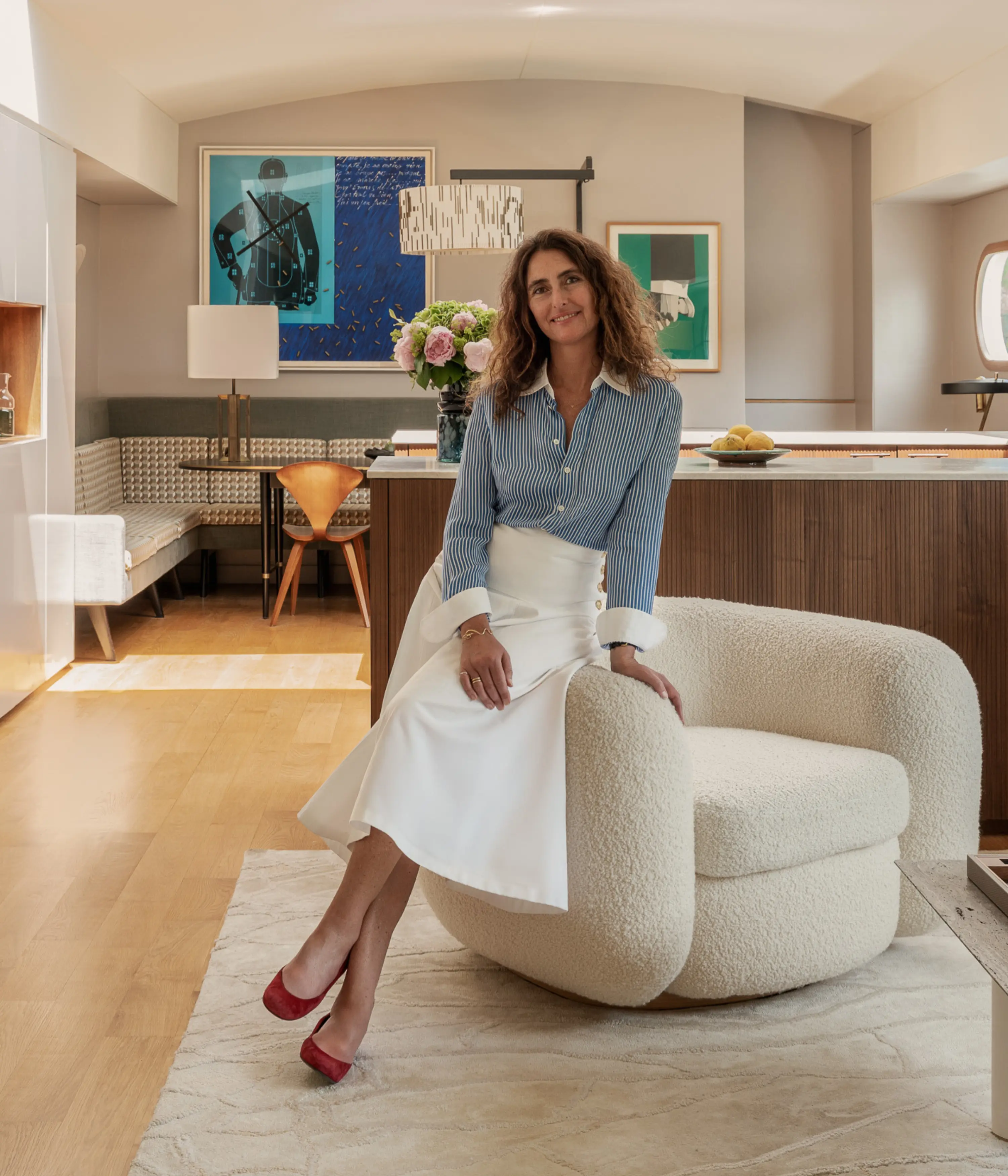
Invisible Collection welcomes French designer Charlotte Biltgen to its New York Upper East Side gallery for her debut solo exhibition in the U.S. In the brand’s debonair townhouse, Biltgen curates a scenography of visual contrasts and tactile sensibility, introducing Ettore, her latest exclusive collection, paired with some of her most iconic designs. The mood is sophisticated yet warm and inviting, conjuring a feeling of subtle luxury. Each design feels composed, as though belonging naturally to the atmosphere it inhabits. Together with Invisible Collection since its inception, Charlotte Biltgen has become one of the quiet forces redefining a distinct idea of French chic. A graduate of the École Camondo and former artistic director for India Mahdavi, she now leads her own studio with a strong architectural eye and absolute devotion to craftsmanship. Through her practice, she pursues a vision of design as a form of haute couture: bespoke, precise, and rooted in the inherent character of materials. Her design language unfolds through a dialogue of contrasts: masculine and feminine, classical and modern, raw and sophisticated. Rather than imposing a fixed style, Biltgen approaches each project as an ensemblier, conceiving the furniture, lighting, and textures as parts of a single, harmonized composition. Every accent — from the curve of a sofa to the finish of a lamp — feels drawn from the same vocabulary of subtle gestures.

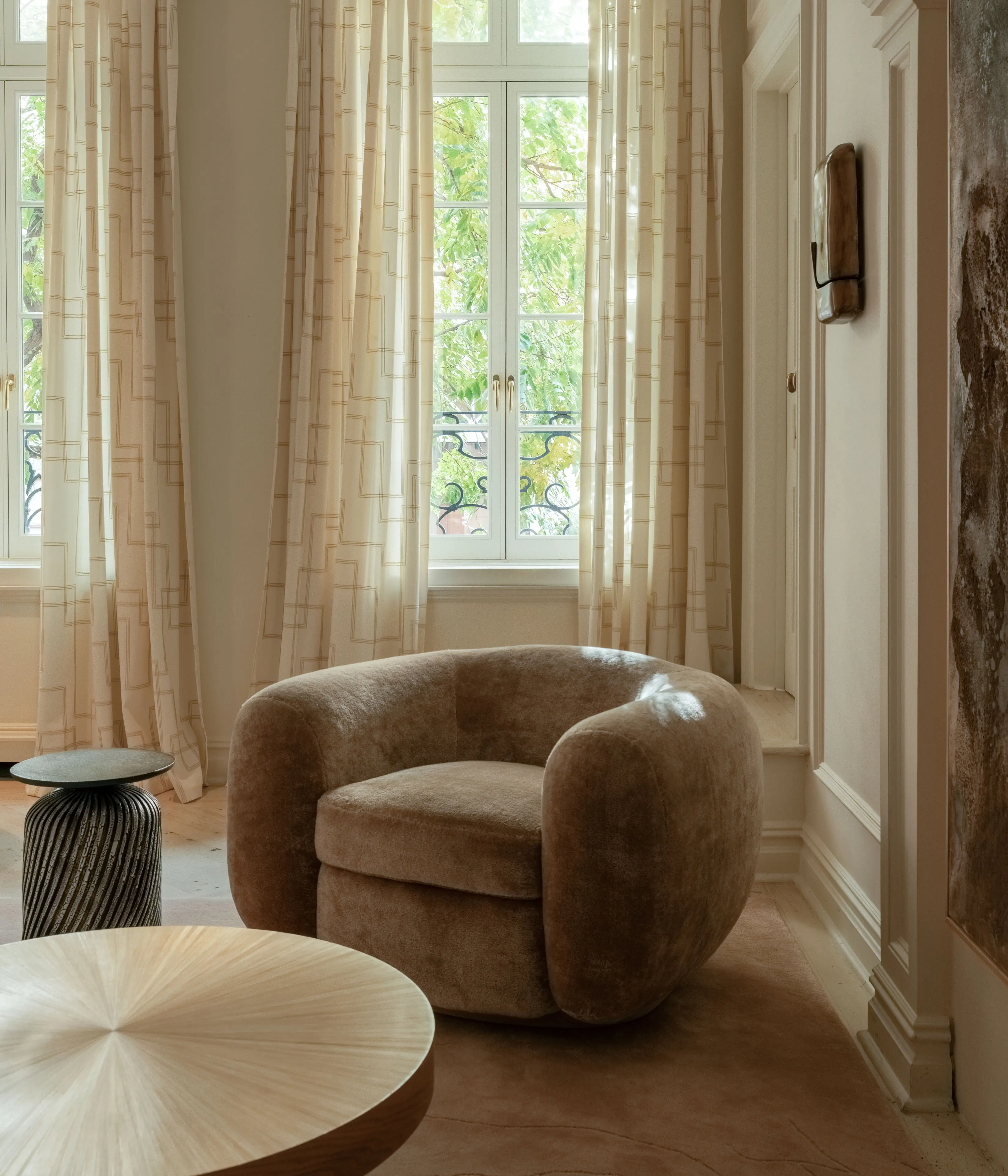
Her collections and interiors alike reveal her fascination with certain Art Déco tenets: sculptural, geometric volumes and the sensorial sophistication of materials. By contrast, color in her work is deliberately quiet, favoring neutrals like clay, chalk, sand, and smoke, a palette that allows light and shadow to play with the forms. This restraint gives her interiors a lasting calm: spaces where craftsmanship, comfort, and the silence of design speak louder than ornament. In this same spirit, Charlotte curated the interiors of Invisible Collection’s gallery, acting as scenographer, designer, and ensemblier. The main space is where she presents Ettore, her newest exclusive collection. The name is a nod to Ettore Sottsass and his lasting influence on entire generations of designers. However, this is not a direct tribute to the Italian master, but rather the starting point of an imaginary journey into Italian tropes of the ’60s: the aesthetic, the cinema, the unmistakable allure, and ultimately the effortless confidence that marked Italy’s creative scene at the time.

Suddenly, all the smooth, generous curves that define the seating of her previous collections — namely Ebisu, Écume, Eileen — lose their opulent undulations and appear in sleeker silhouettes and slightly sharper angles. The Ettore sofa and armchair are a sequence of more angular traits, with a sweeping line connecting the two armrests, adding depth and rhythm; their structure appears almost suspended above short metal feet. “Their aerodynamic lines suggest movement and intimacy, as if the faint scent of cigar smoke might still linger over aged leather and dim light,” says Charlotte. “In its undertones, Ettore evokes the glamour of cult Italian cinema: refined salons, velvet-lined bedrooms, and the intoxicating mood of La Dolce Vita. The design is both structured and fluid, sculptural yet effortless — recalling the sensual curves of vintage sports cars and the luxurious interiors that defined Italian modernism.” Every detail and every finish of the Ettore collection celebrates the mastery of artisans who turn material into emotion, where time and touch transform craftsmanship into art.