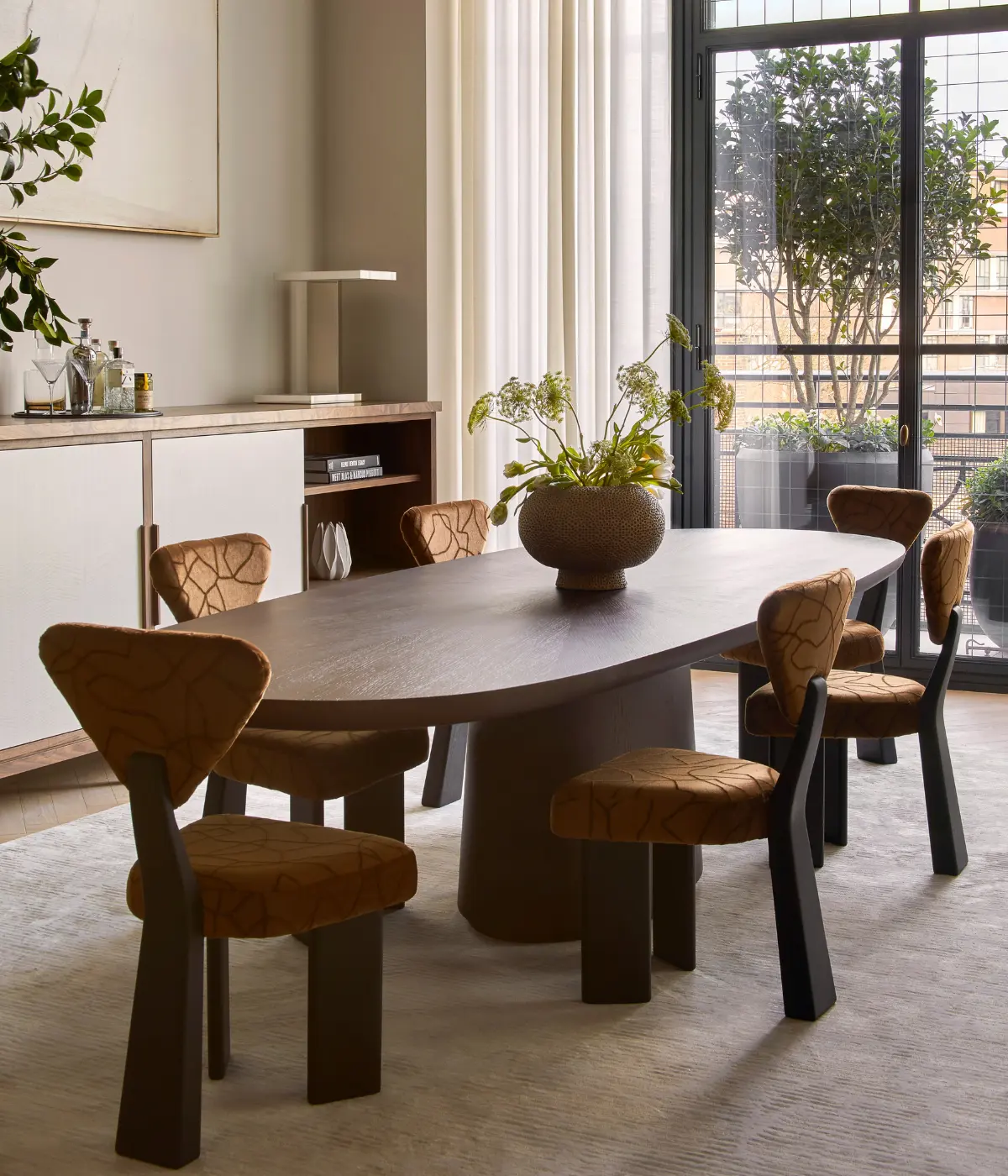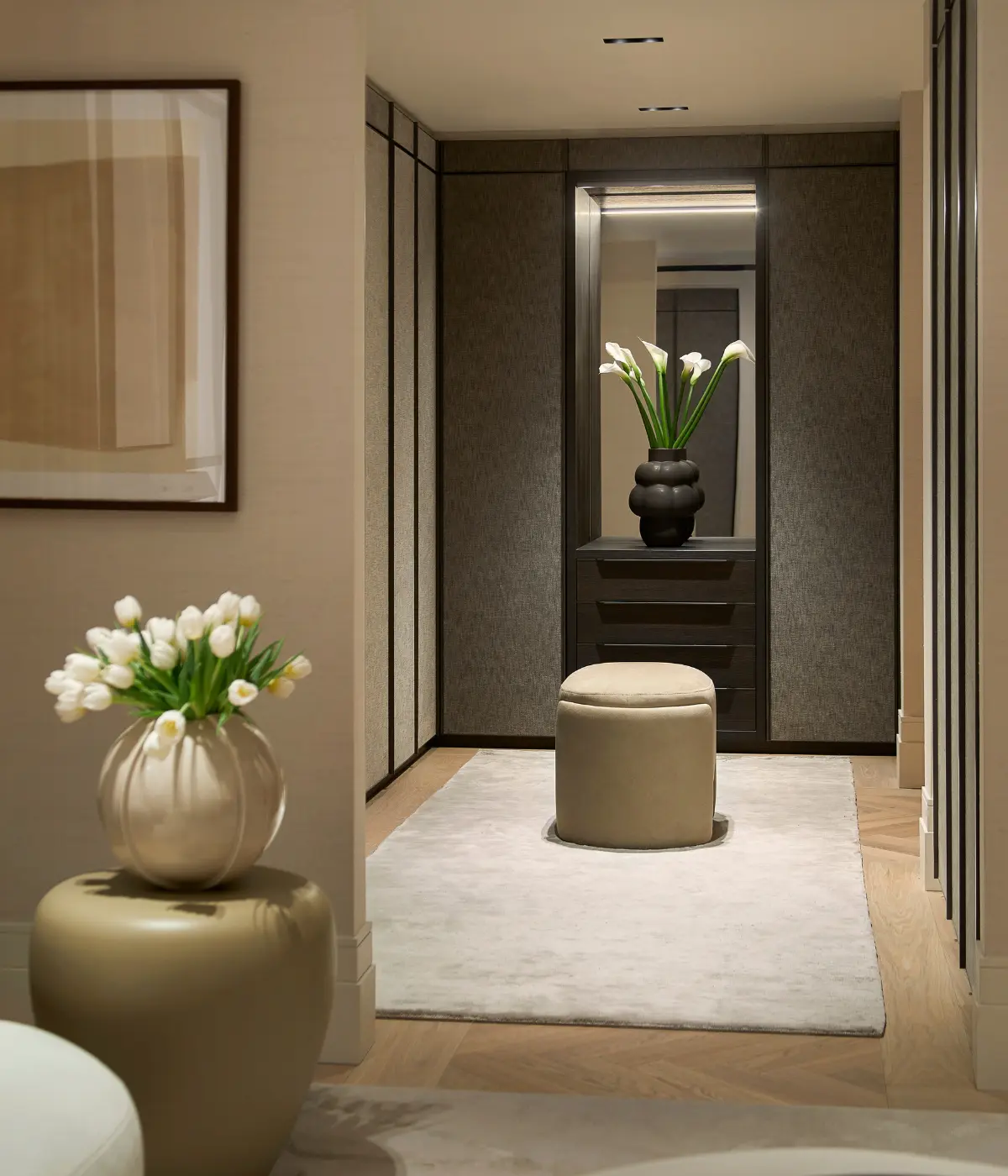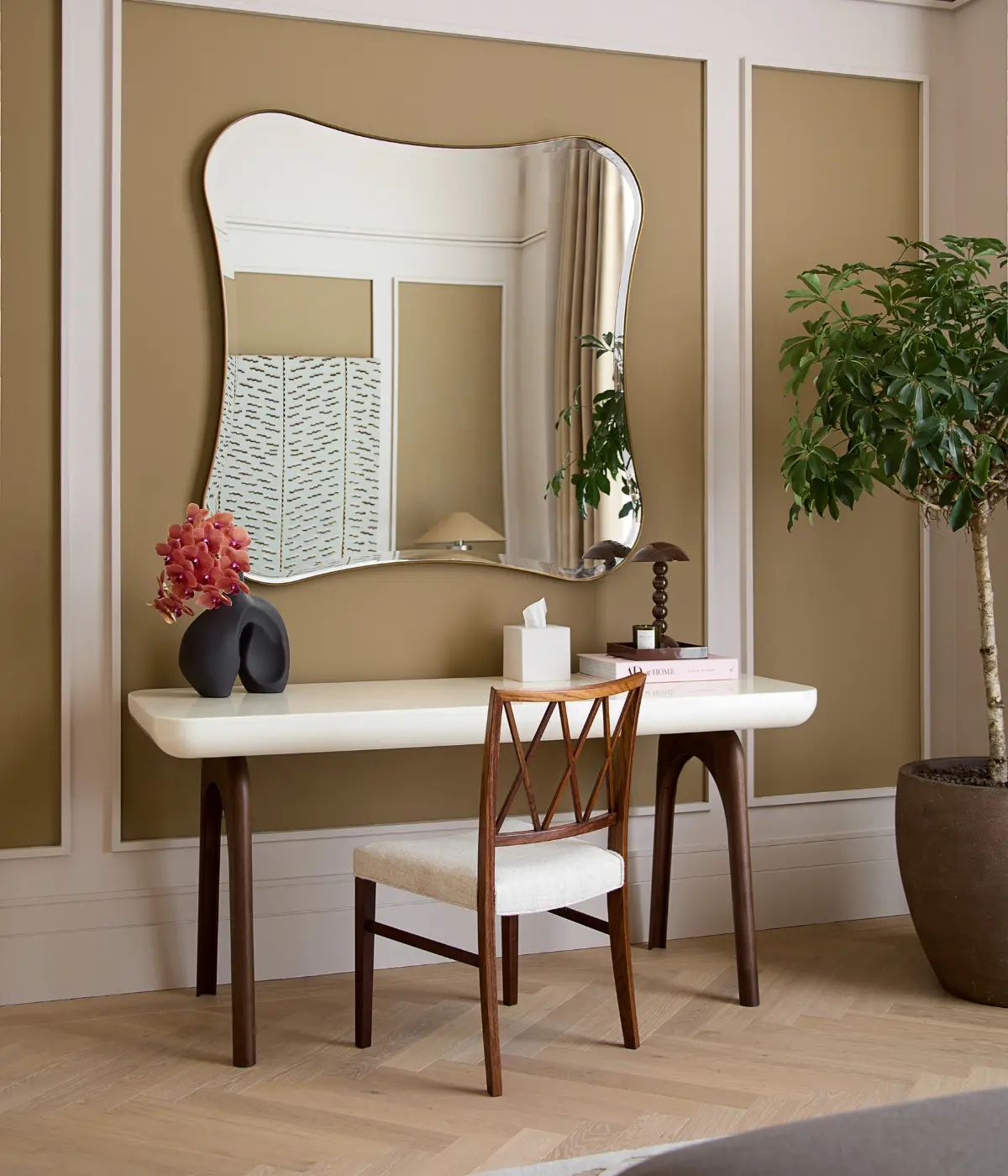

The Whiteley began life as William Whiteley’s pioneering London department store in the late 19th century, becoming one of the city’s best-known and most fashionable retail landmarks. Recession and new shopping habits in the 1970s led to its closure. For years, the building remained untouched, alive only in the memories of Londoners and in history books. Finally, at the turn of this century, it has been redeveloped and brought back to its former splendor, standing tall as a mixed residential and hospitality destination, with private homes, restaurants, retail, and the UK’s first Six Senses hotel.
The project preserves the building’s historic character while reimagining it for contemporary living, presenting a collection of exclusive designer residences, including a spectacular duplex designed by Maoliosa Murray in collaboration with Invisible Collection. We visited the residence before it hits the market: take a tour with us in this video and discover more about the project in this interview with Maoliosa.

What makes this building significant?
We are in the iconic Whiteley building in Bayswater, a landmark that dates back to the early 1900s. Originally founded by William Whiteley as one of London’s first grand department stores —contemporary to Selfridges — it was a glamorous destination filled with Art Deco detailing.
Today, the building has been reimagined, but it retains many of its original features, including the beautiful leaded windows that we were fortunate to preserve in this duplex. The location is also exceptional, nestled between Hyde Park and Notting Hill.
How did you approach the design of this residence? What influenced the interiors?
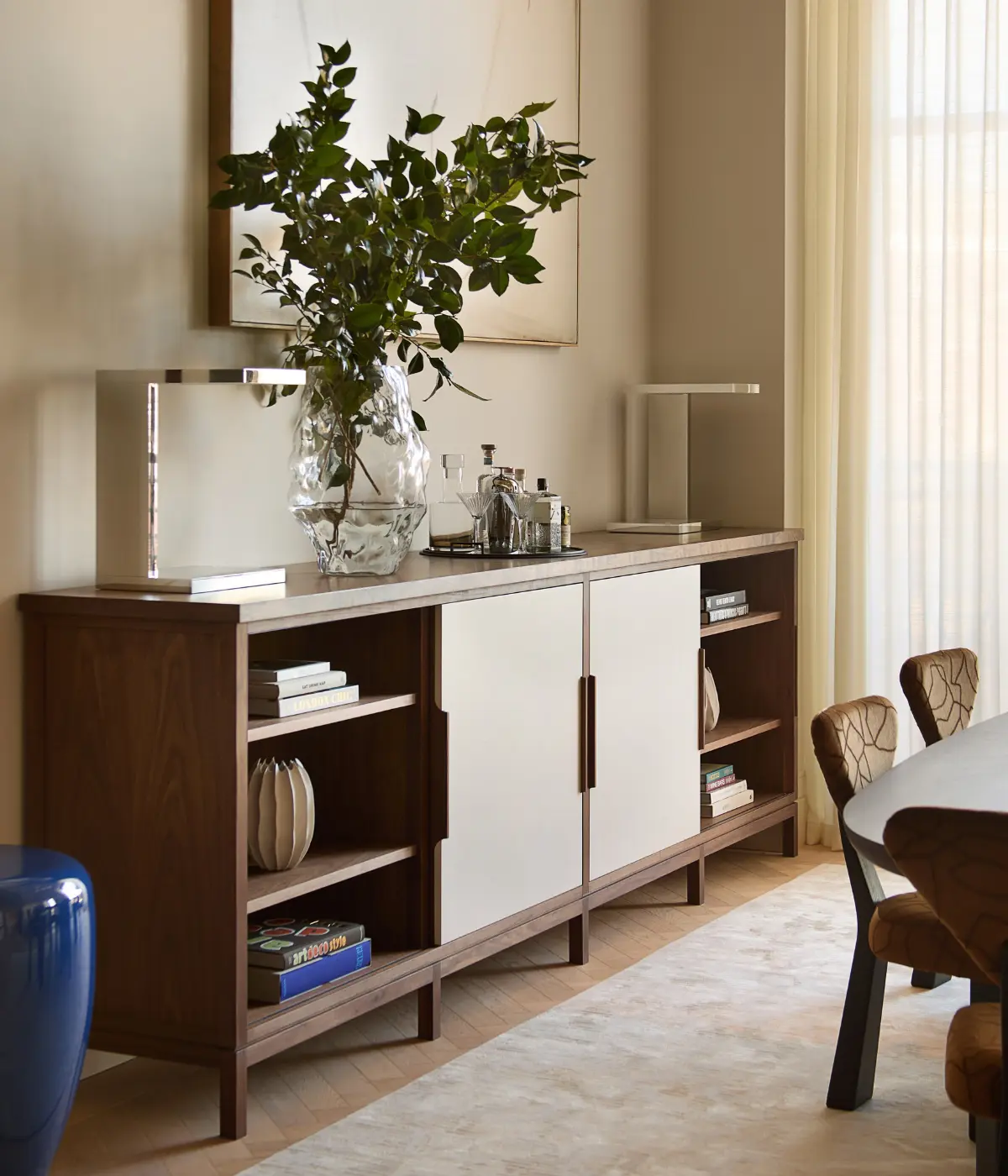
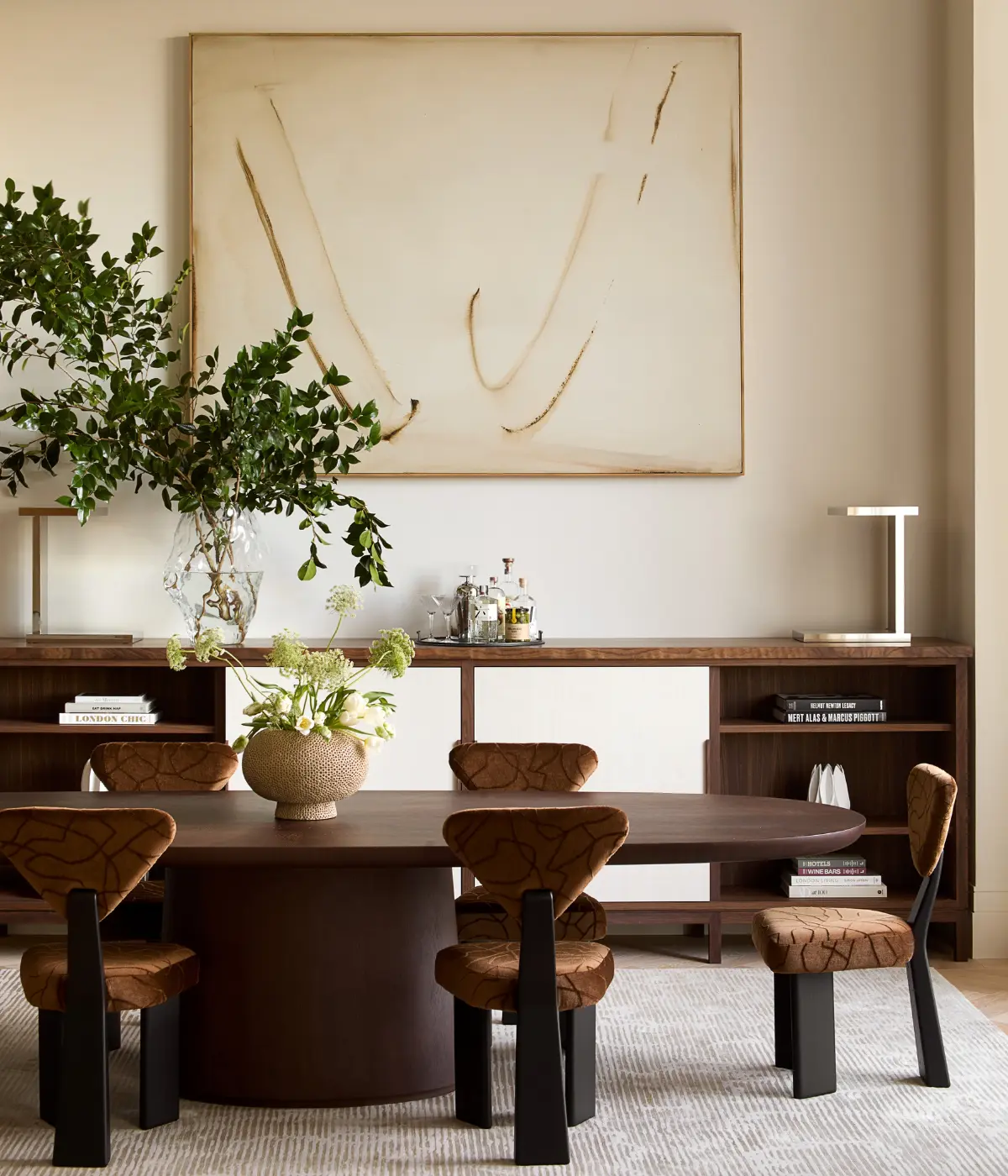
The building’s Art Deco heritage was the starting point for the entire design. It informed the choice of furniture, lighting, and the overall aesthetic language of the space. We collaborated closely with Invisible Collection, selecting exceptional pieces by French designers, alongside bespoke joinery that I designed specifically for the apartment. There’s also a subtle Irish influence woven throughout, particularly in the artwork. On a personal note, I grew up nearby and have always known The Whiteley well. My mother ran a ceramics gallery, which inspired the porcelain elements incorporated into the custom joinery, small, meaningful references that make the project feel deeply personal.

What is the first thing you notice in an interior?
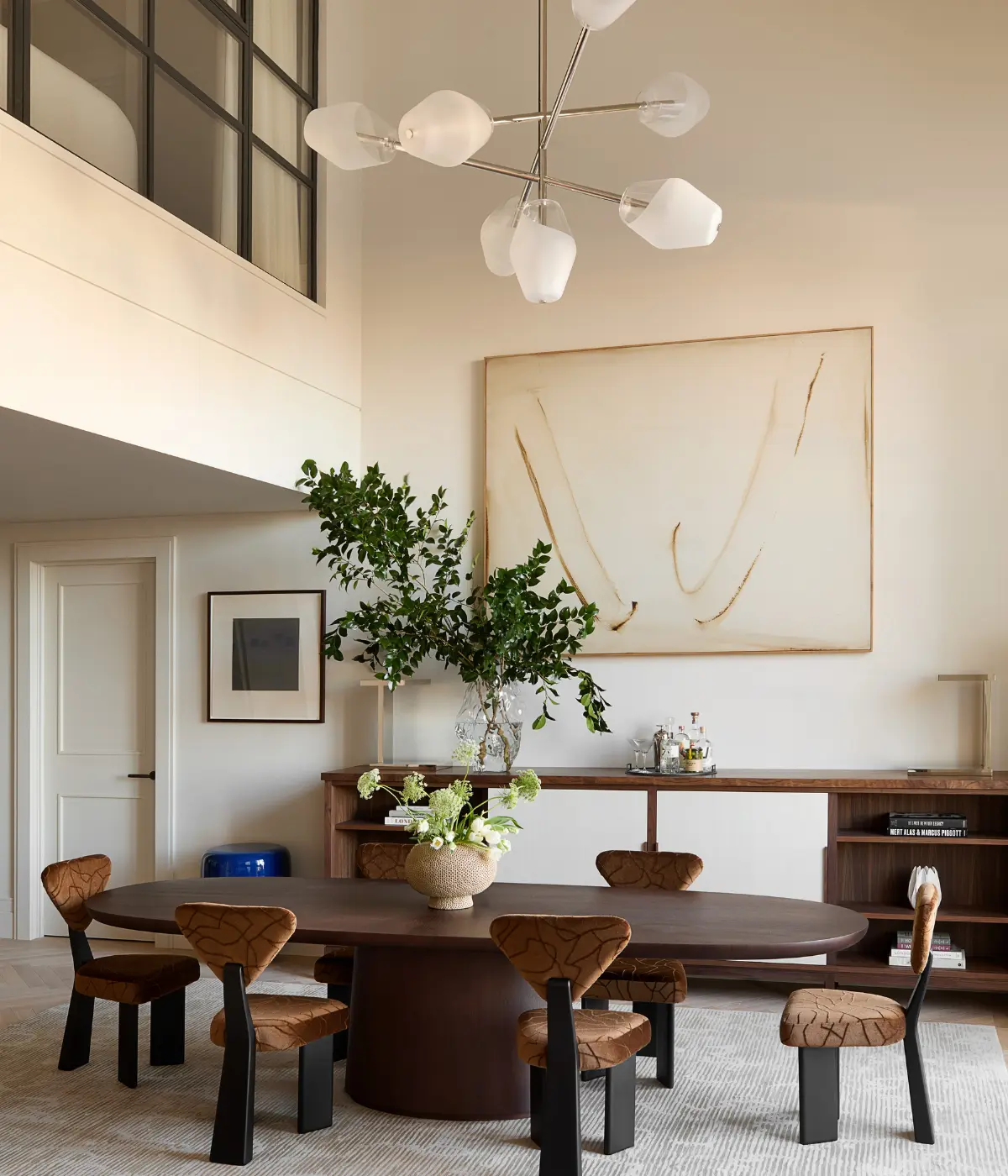
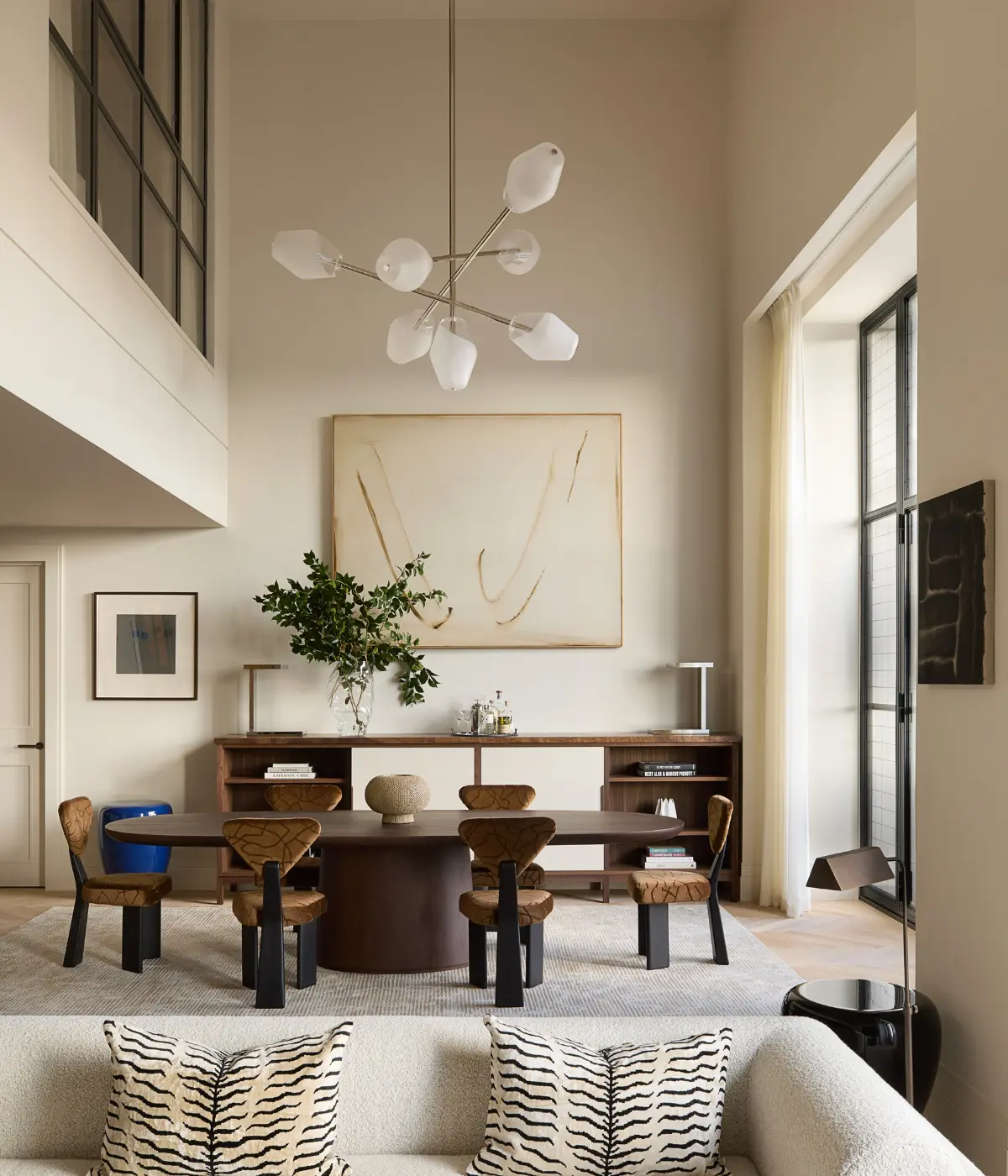
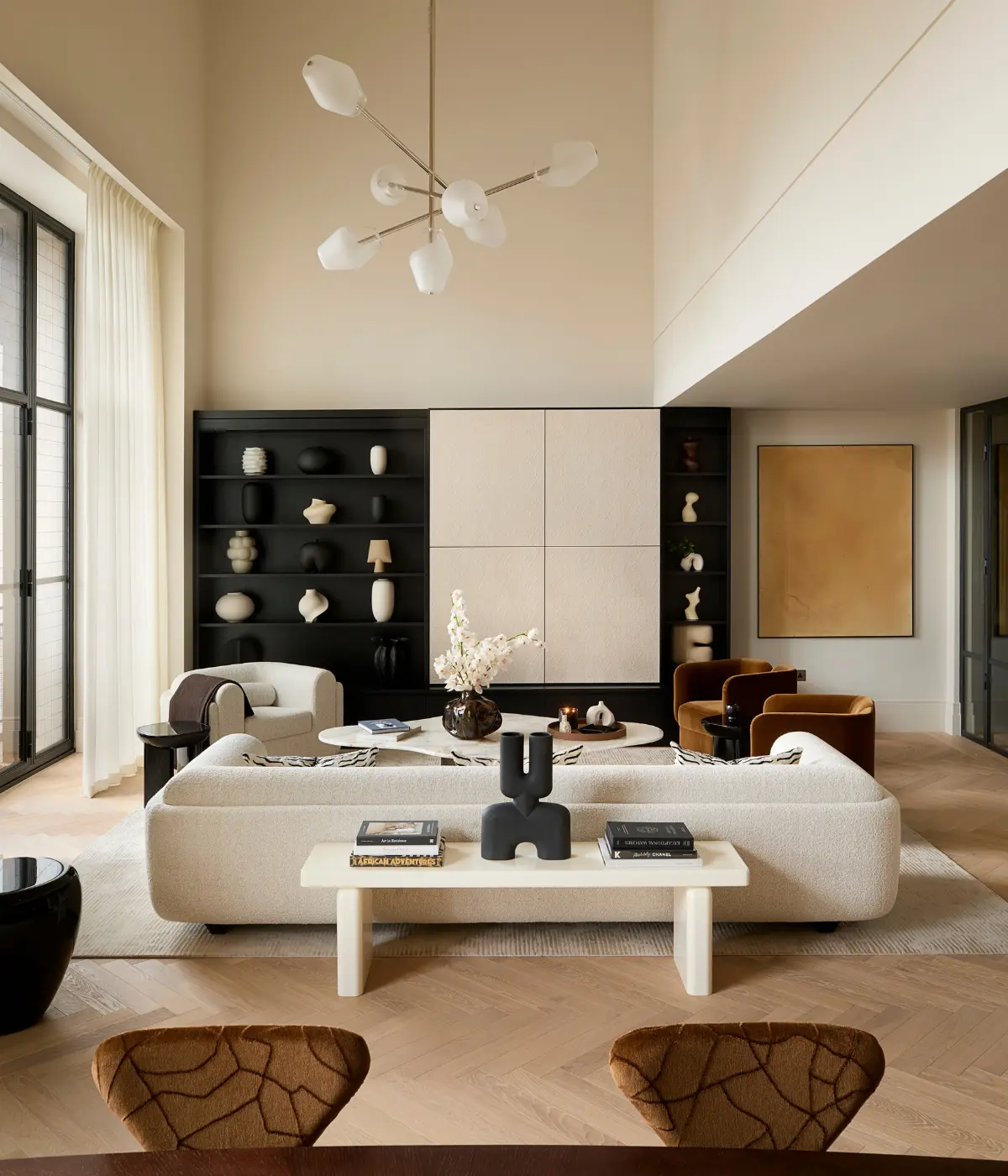
Light. Always. Natural light is the first thing I look for, and here we are incredibly fortunate. The six-metre-high ceilings and the original leaded windows, opening onto Juliet balconies, flood the space with light. Artificial lighting is equally important in shaping atmosphere. We worked closely with Invisible Collection and Ozone to select pieces that enhance the architecture. The upper chandeliers, with their nickel finish, reference the Art Deco period beautifully, while the lamps integrated into the custom furniture add warmth and intimacy.
Do you have a favourite space in the apartment?
The staircase is one of my favourite features. It has a strong presence, almost reminiscent of a New York townhouse. For this space, I collaborated with The Rug Company to design a bespoke silk-and-wool stair runner with an ombré effect, transitioning from deep chocolate tones at the top to lighter shades below. We also commissioned a striking monolithic artwork by Belgian artist Jan Kool, alongside his Turon in Olive piece. These sit beautifully beside the Careless Whisper table by Damien Langlois-Meurinne, which functions as both an entry hall table and a small dining surface. Its glossy black finish perfectly complements the Art Deco influence of the space.
How did you approach the guest bedroom?
Every room has its own personality, and for the guest bedroom we wanted to create a warm, inviting atmosphere while still respecting the scale of the architecture. We anchored the six-meter ceiling height with Brasilia pendant lights by Ozone, sourced through Invisible Collection. I introduced paneled walls and Argile Paint to bring depth and colour to the space. The bed was custom-made, upholstered in Dedar fabrics, the playful Tiger textile paired with Vladimir velvet at the base. The windows are dressed with sheer curtains in virgin wool and heavier wool drapery, also by Dedar, all custom-designed for the project.
What is your favourite room overall?
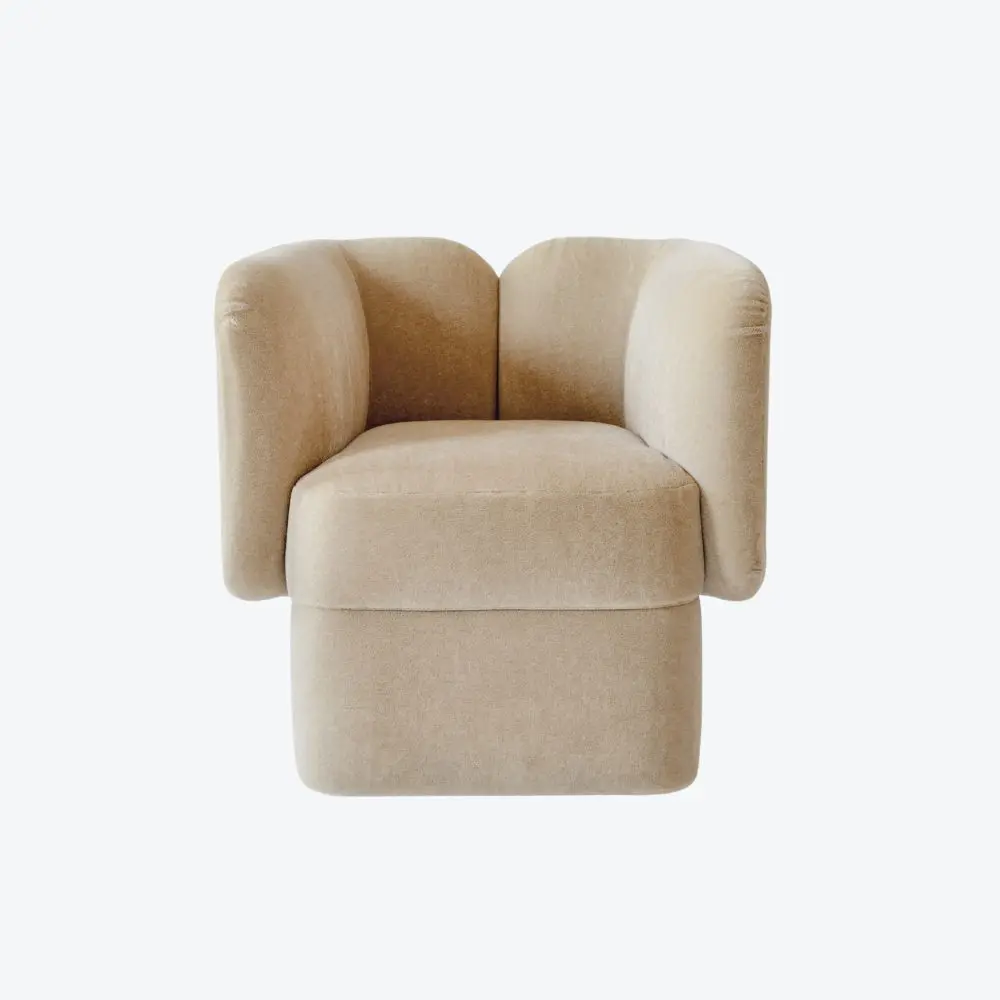
The living room is my favourite space in the residence. It brings together many of my favourite pieces from Invisible Collection, several of which I’ve used in previous projects. The Eileen Sofa by Charlotte Biltgen was custom-made to nearly three meters to suit the scale of the room. It’s paired with the Dolly armchairs, which I return to often in my work. At the centre, we have a White Shadow coffee table by Damien Langlois-Meurinne, with a bespoke onyx top that makes it particularly special. The Dot side tables, finished in glossy black lacquer, add a final layer of elegance.
Can you highlight a standout design piece from Invisible Collection?
Lighting plays a crucial role in defining the living and dining zones, especially given the six-metre ceiling height. The Opera chandeliers by Ozone are key to this. Finished in mirror nickel — a subtle nod to Art Deco — they were custom-made in length to suit the proportions of the space. They are both sculptural and functional, and truly anchor the room. Another piece I love is the pair of table lamps placed on the console — crafted in a mirrored nickel finish, they emit a soft, flattering glow. Alongside them, the Furtiv lamp, sourced through Invisible Collection, is a beautifully refined object in its own right.