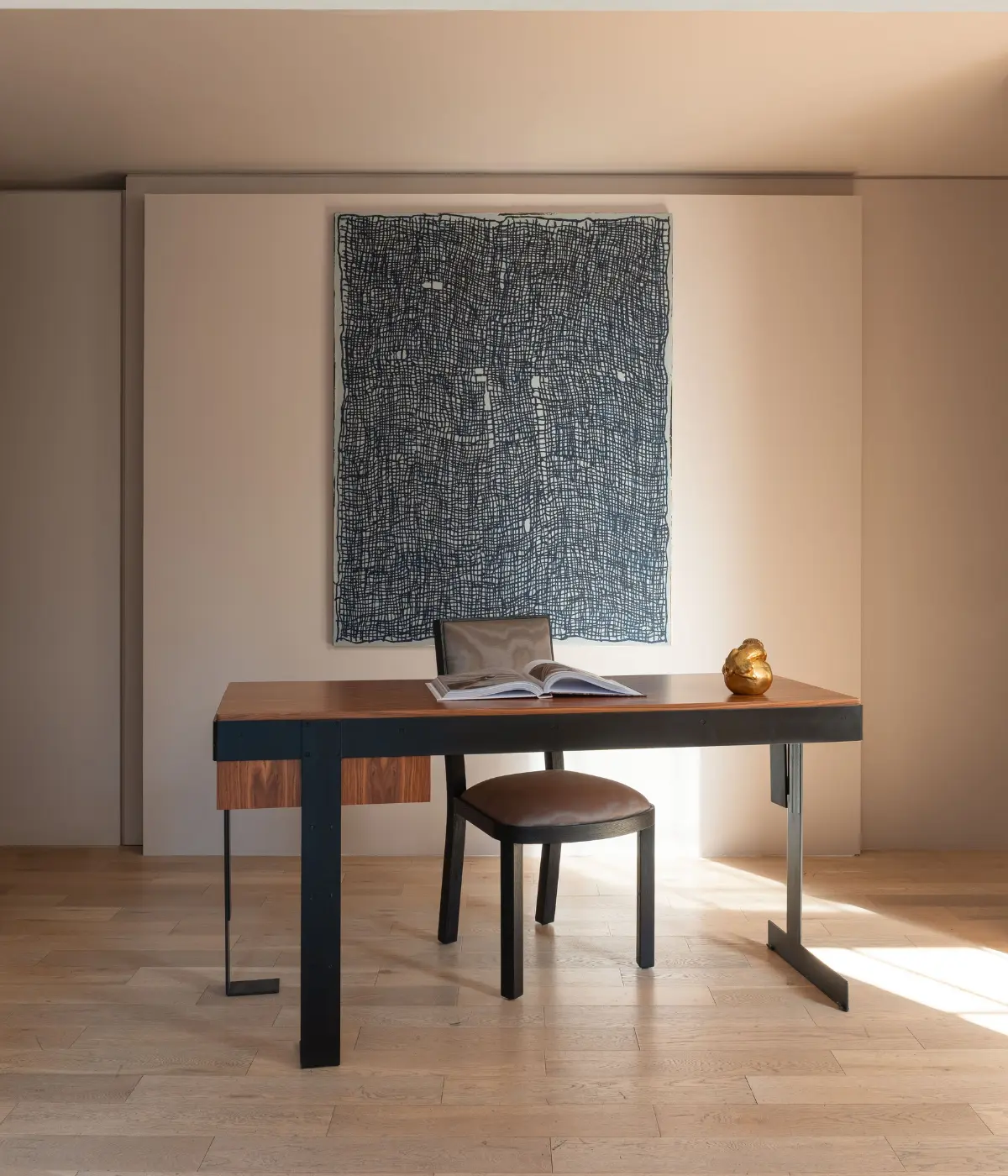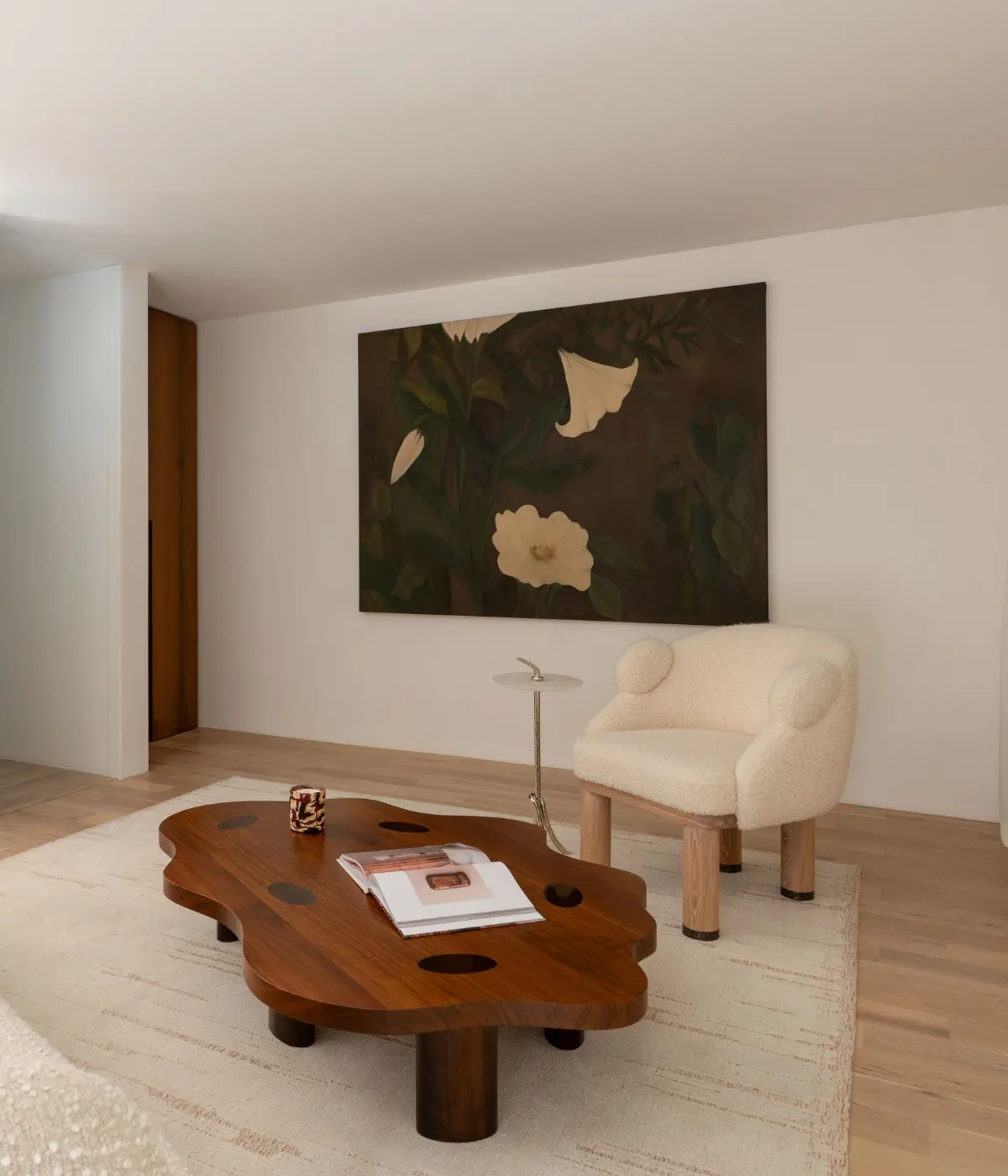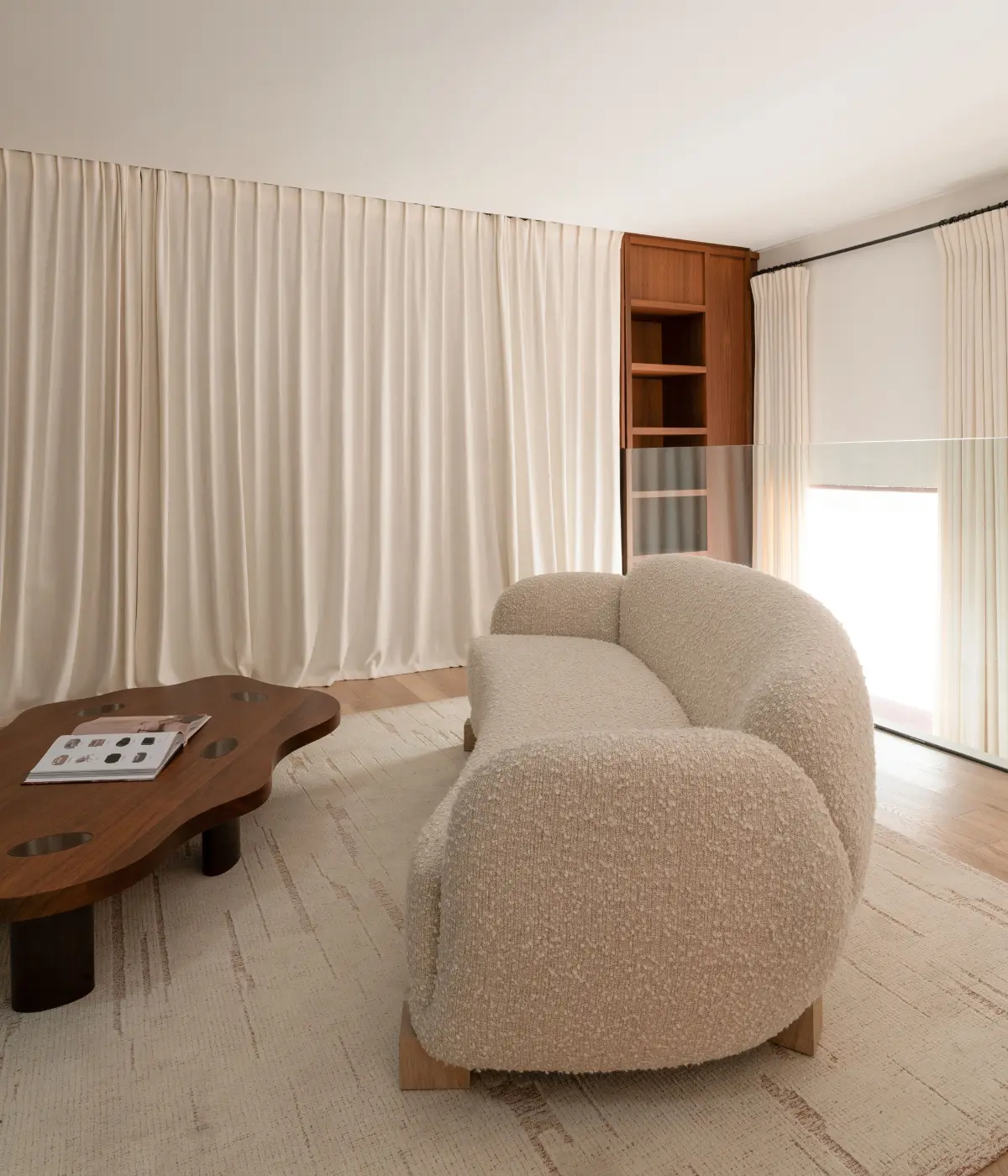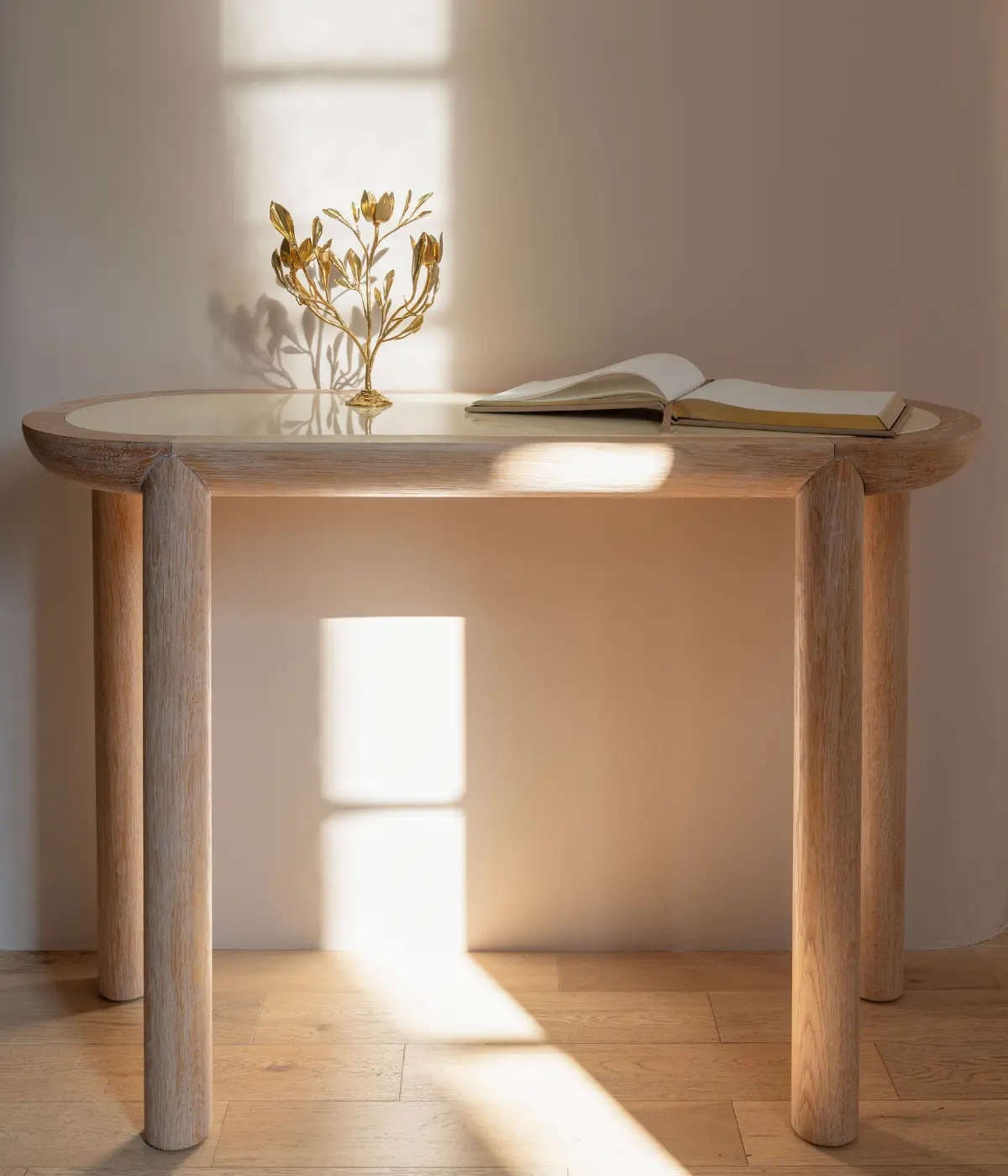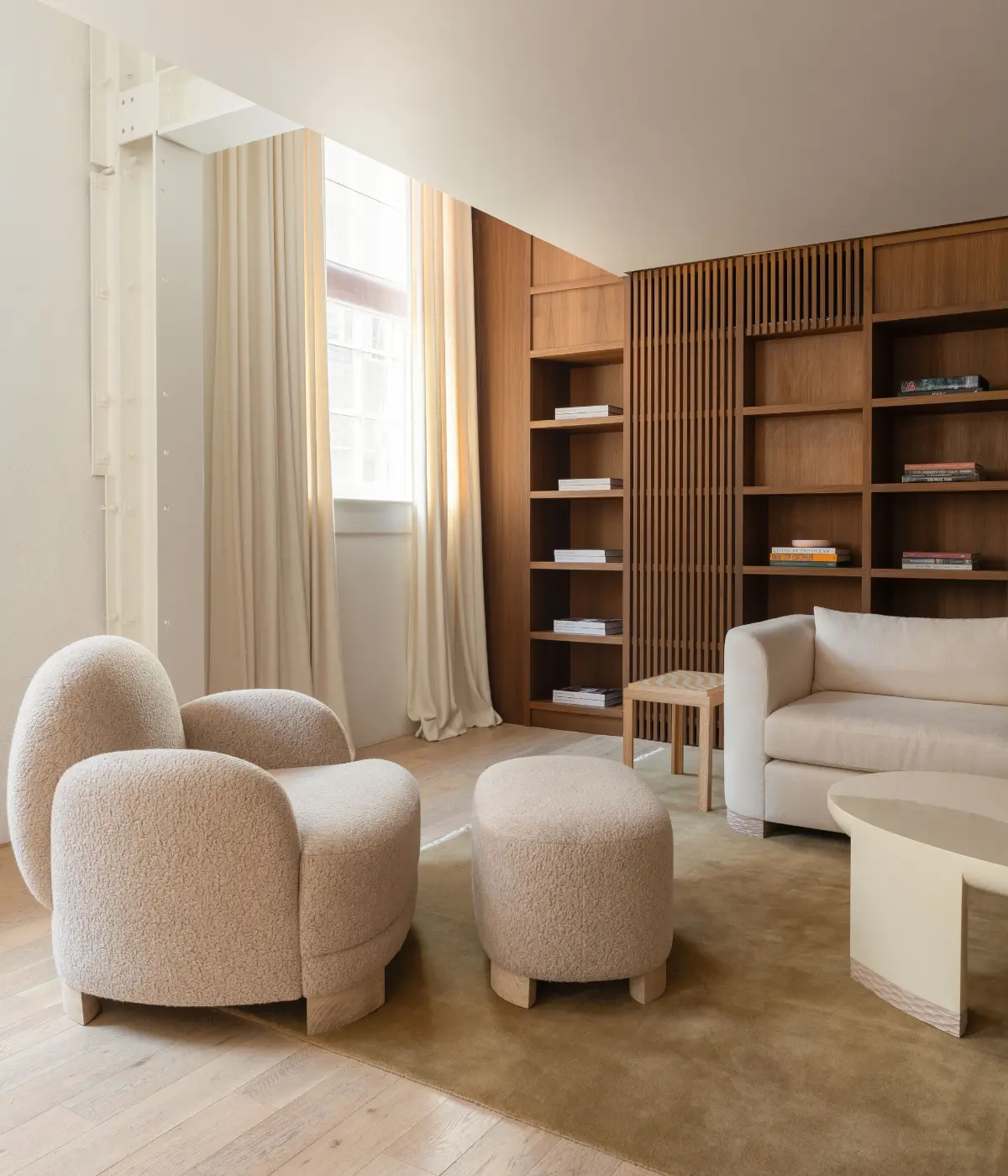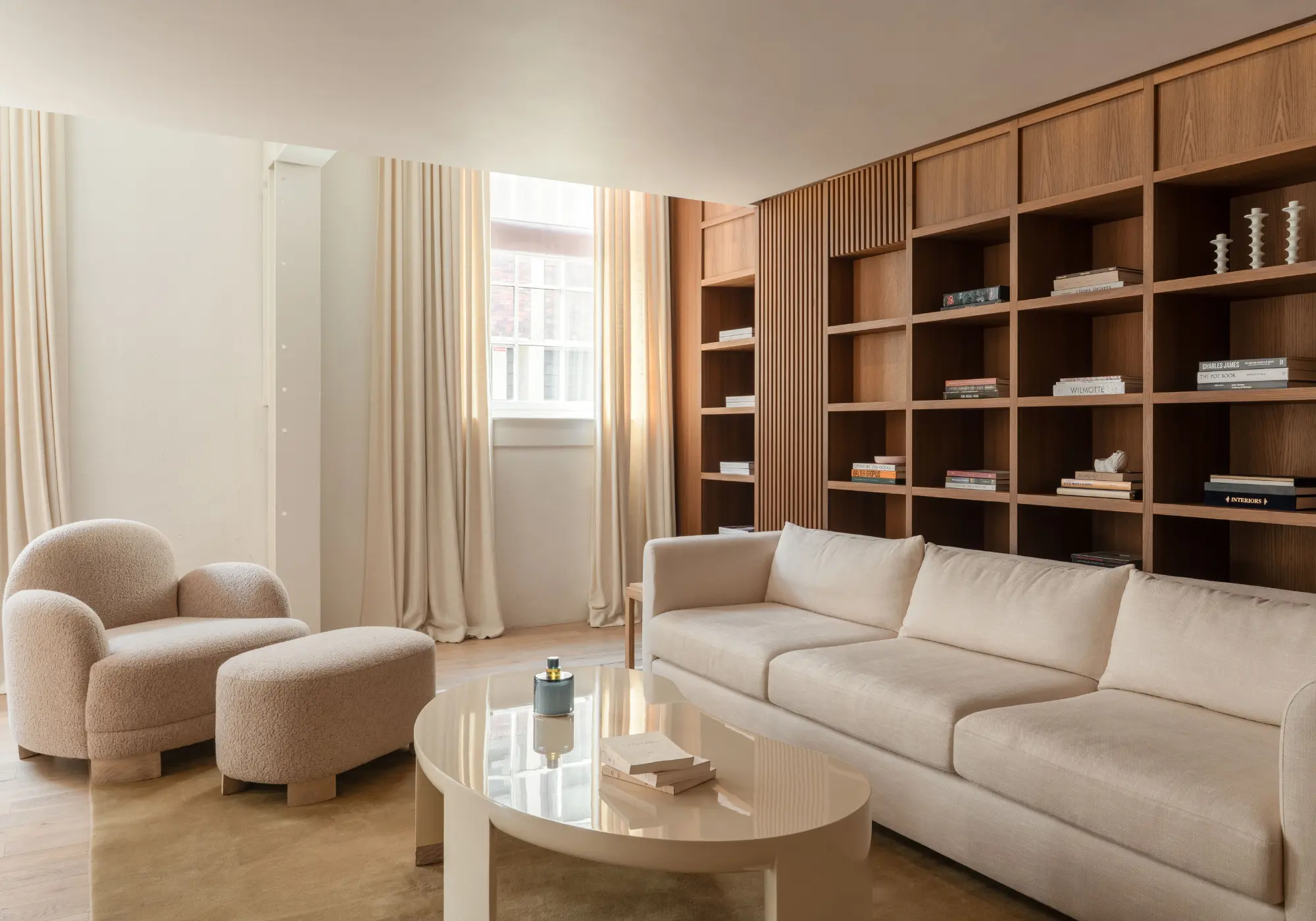

The affinity between Leo Sentou and Invisible Collection is a given, as we share an enduring passion for the savoir-faire and refinement of the 18th century — a time of enlightenment in ideas and of great sophistication in lifestyle and taste. With Past Forward, an exhibition of Sentou’s designs now on view in our London gallery, we illustrate the subtle connections that still bind us to that period, though free from any form of repechage. The ineffable Ben Weaver, design consultant and prolific author of enthralling essays on design, sums it up: “One can trace a line through the history of French decorative arts, from the ancien régime, when the French court commissioned works by the likes of Georges Jacob, Jean-Henri Riesener and Louis Delanois, where the art of the ébéniste was pushed to its limits in a pursuit of cutting-edge design, until a century later, when modernists such as Jean-Michel Frank, André Arbus and Marc du Plantier took these eighteenth-century shapes, stripped them of ornament, and created furniture that once more seemed undeniably modern, furnishing the homes of great collectors such as Marie-Laure de Noailles and Charles de Beistegui. Once again, the elegant silhouettes first seen during the reign of Louis XIV graced the interiors of the haute bohème, regarded as the very apogée of refinement. Such a lineage can be seen today in the work of Leo Sentou, who, looking back once more to the foundations of French luxury, reinterprets these timeless forms in a manner that feels utterly contemporary, yet speaks unmistakably of the savoir-faire that distinguishes French design, embracing as it does an enduring obsession with craftsmanship and refinement.”

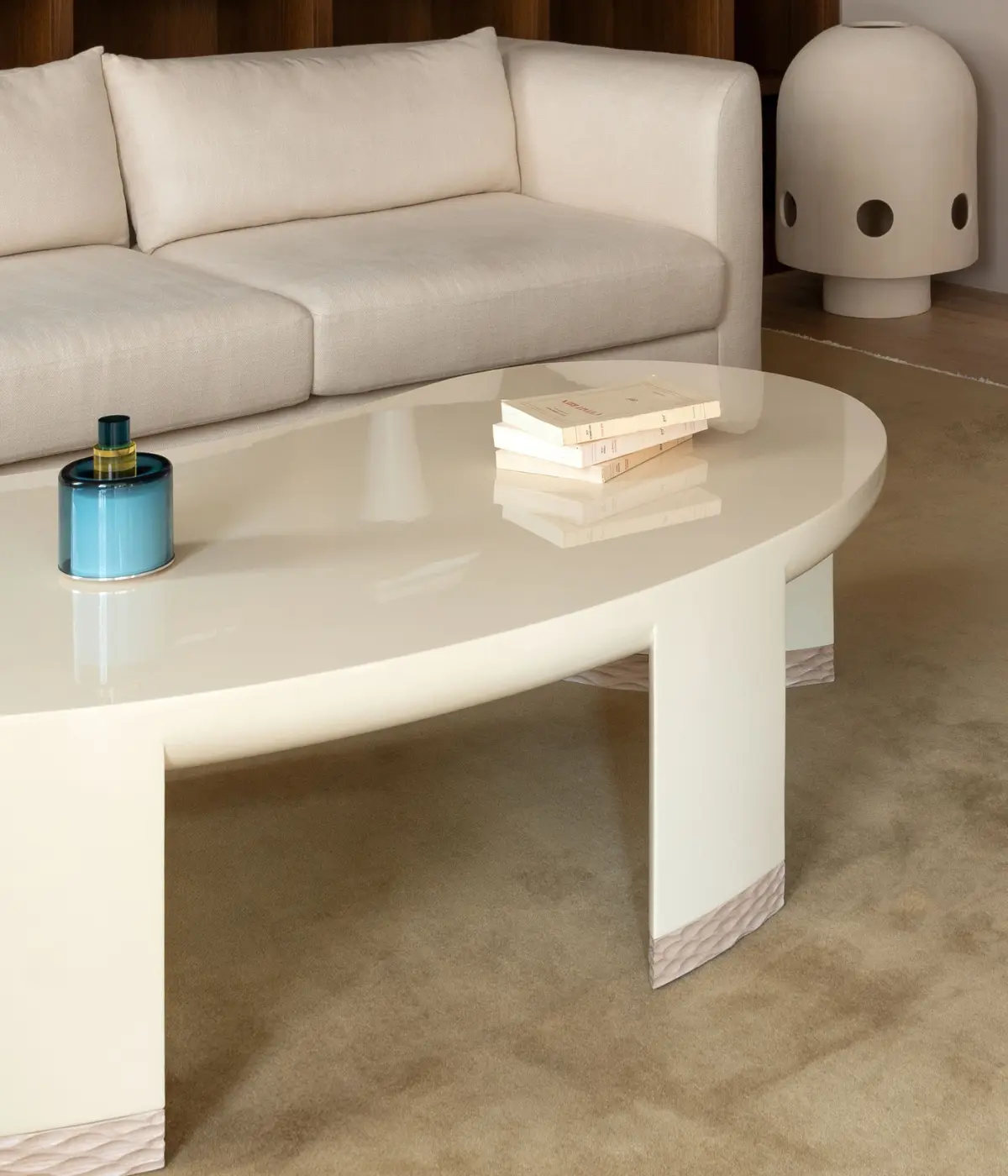
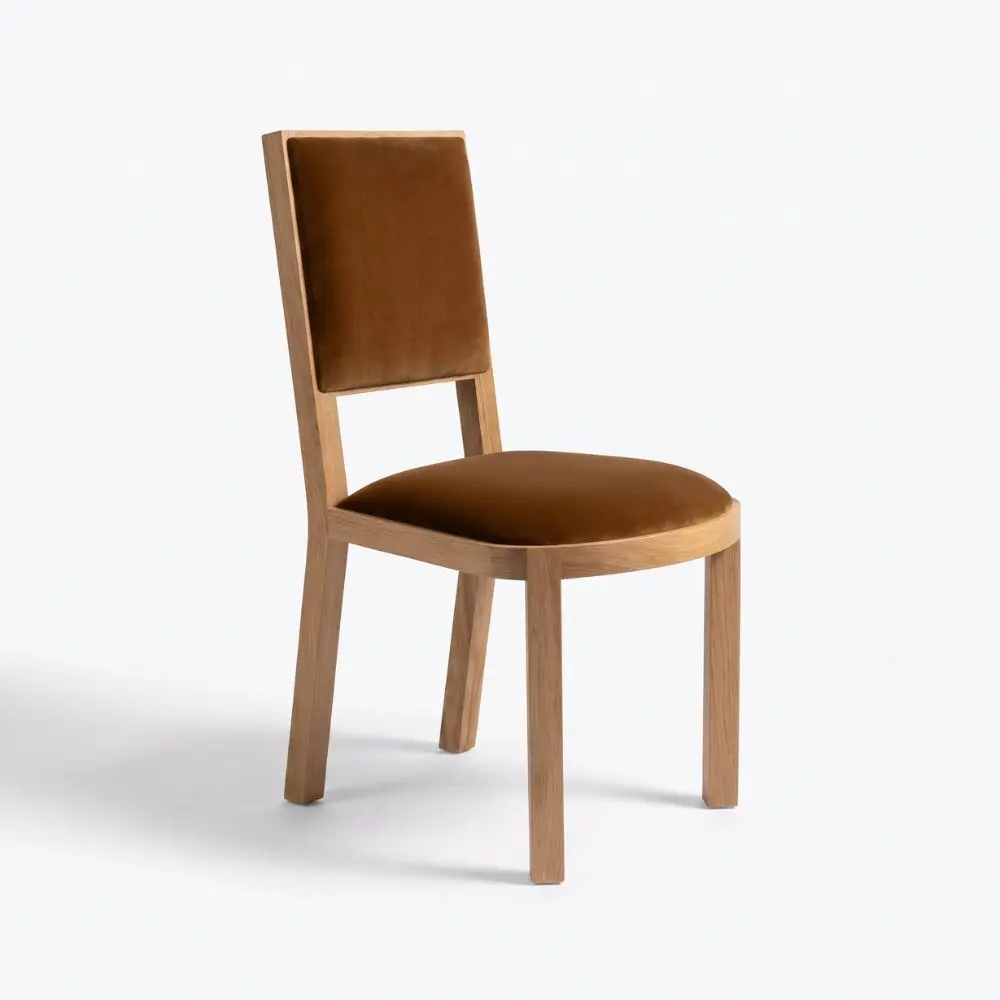
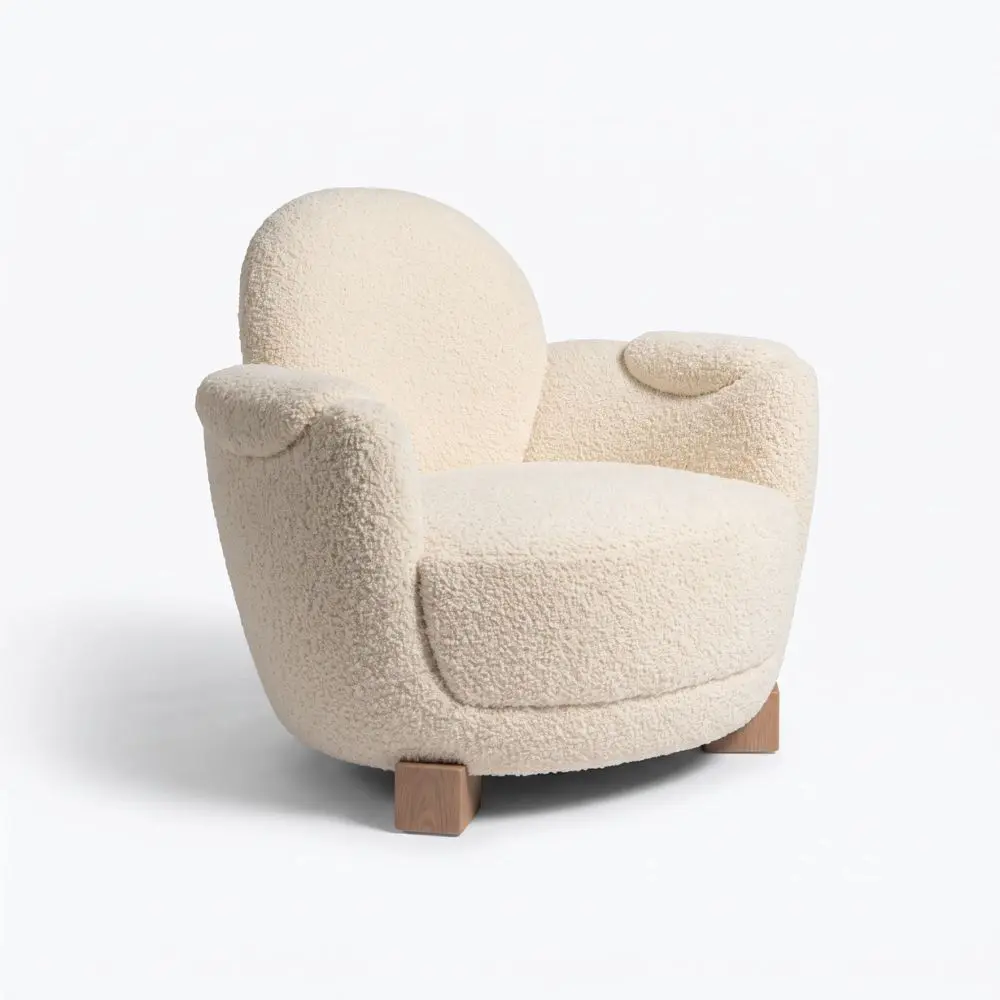
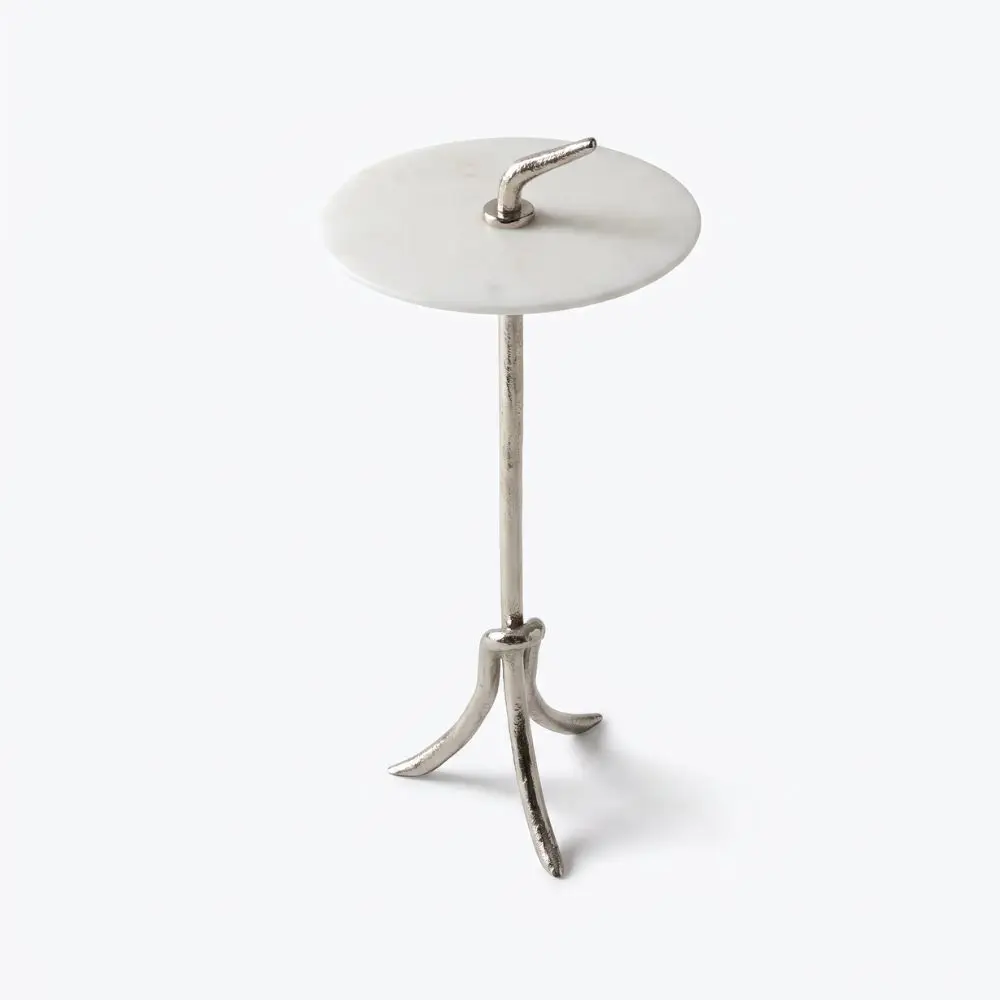
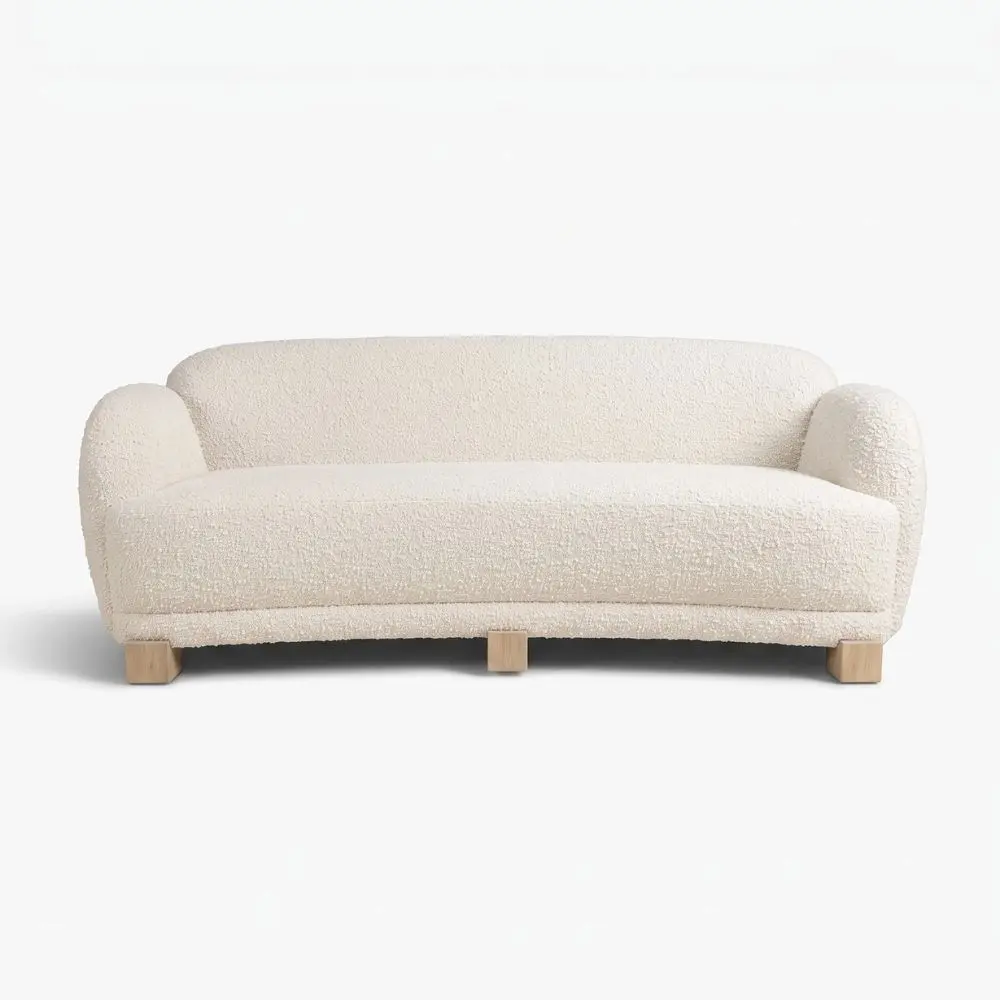
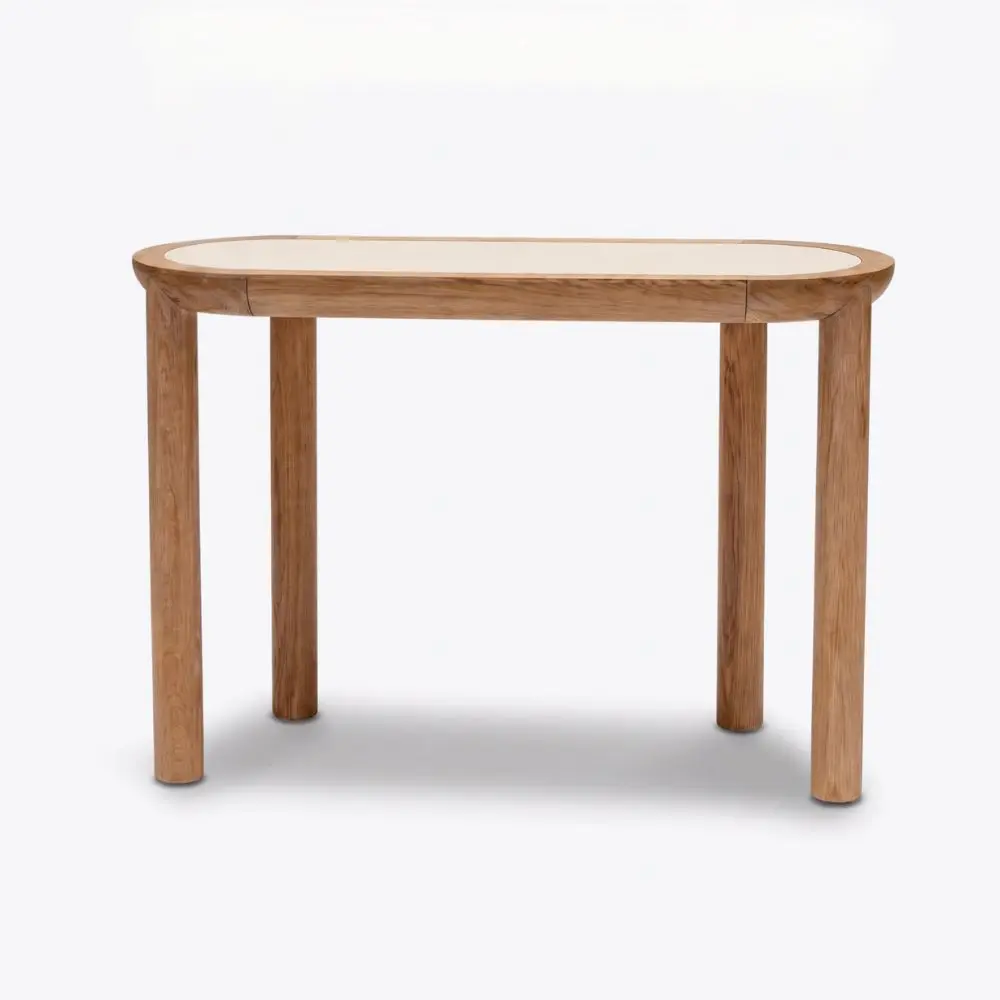
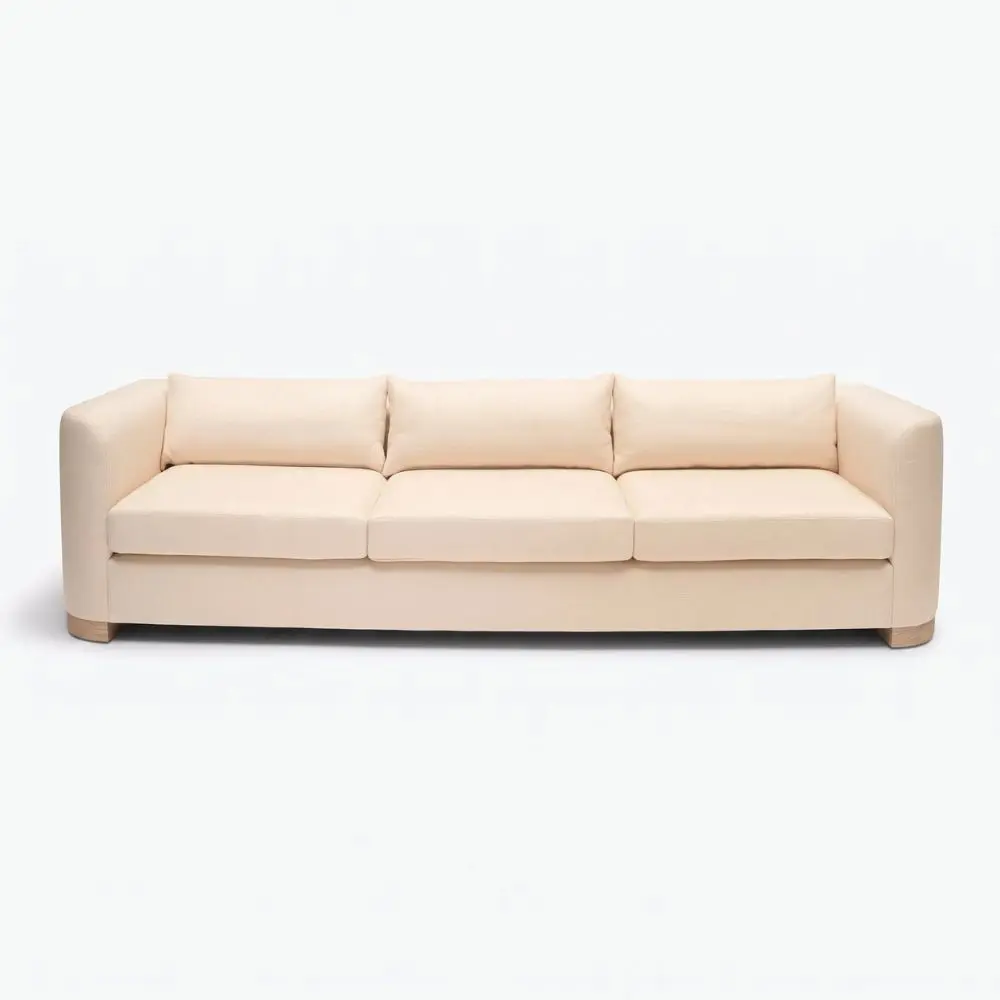
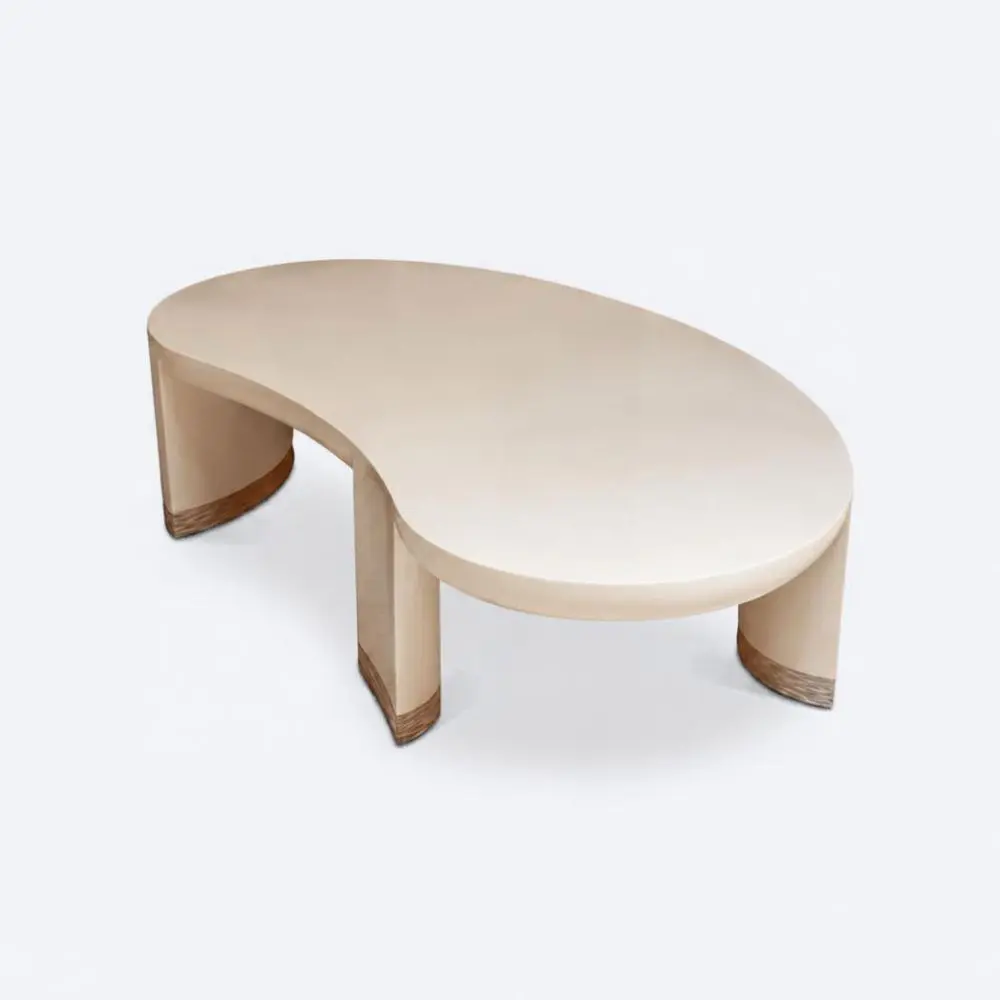
“Such an approach — adds Weaver — can be seen perhaps most clearly in Sentou’s Fauteuil Oval, inspired by an elegant oval bergère by Delanois, or his Fauteuil Écusson, which takes its cue from an unusual écusson-backed armchair by Jean-Baptiste Lelarge. Yet these references, while ever-present, become more subtle in his Canapé Ligne, Fauteuil Bernard, or Carlin Coffee Table, which appear as avant-garde as those early twentieth-century modernists, while retaining the sophistication and understated elegance so characteristic of French design. His work thus bridges two worlds — that of the ancien régime and that of Art Moderne — resulting in a truly distinctive and timeless collection, honouring the enduring tradition of French ébénisterie.” The exhibition subtly merges these distant worlds in a display where every piece confidently asserts its timeless ethos. “I always start a new piece when I come across something that captures my attention, whether it’s an auction catalogue or an old book,” says Leo. “From that initial inspiration, I draw and draw and draw, trying to find its essence. For me, getting the proportions right is essential — from the first doodles to the more elaborate, finished drawings before the piece is sent to the makers. I also explore materials, always seeking the true essence of the wood. Although I tend to gravitate toward oak, I consistently have it bleached, limed, and textured.”

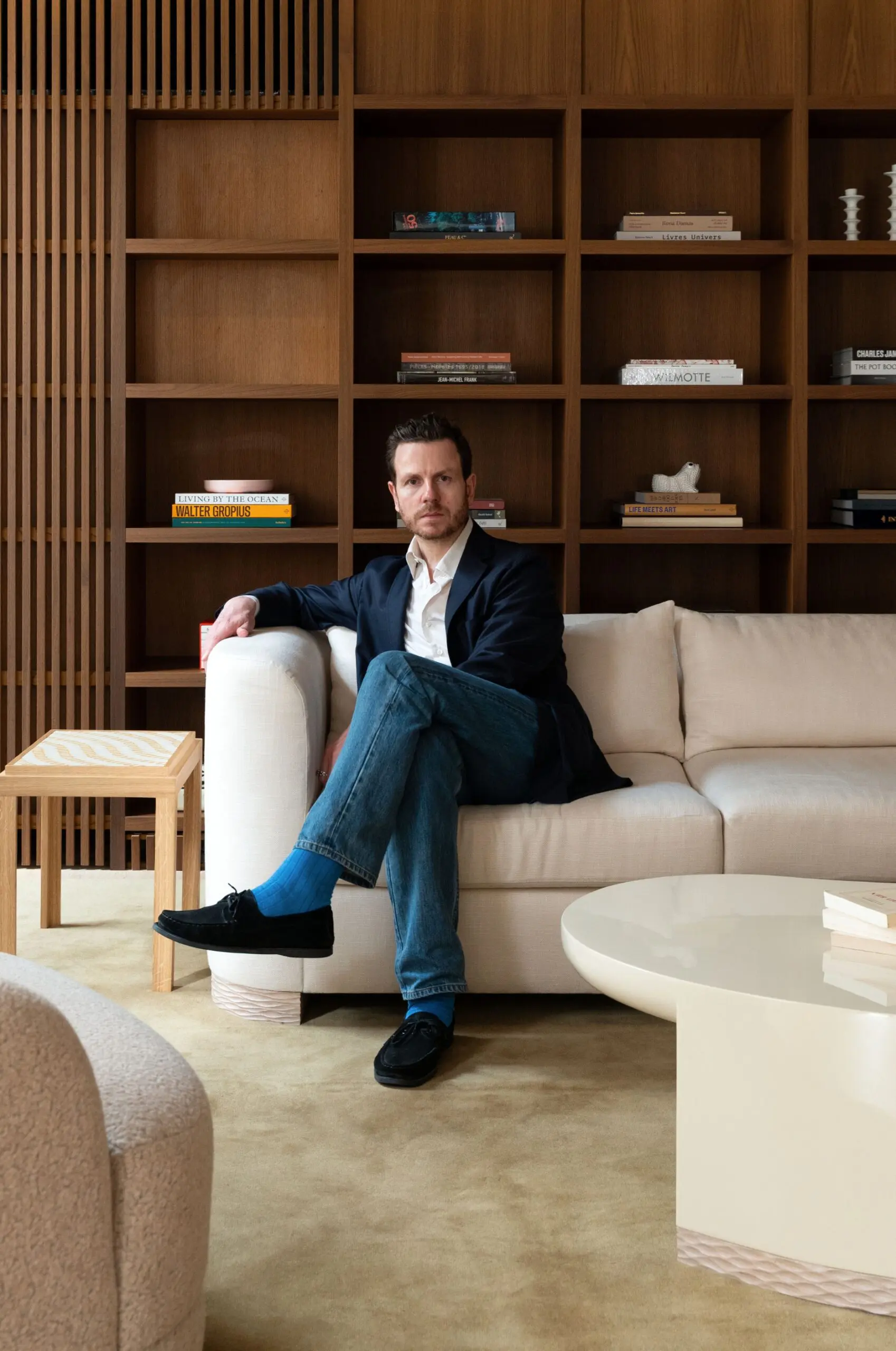
A self-proclaimed “contemporary classicist”, Leo Sentou trained at the ENSAAMA Olivier de Serres School in Paris before moving to London to pursue a master’s degree at Central Saint Martins. While working on high-end residential and hospitality projects, he launched his first furniture collection in 2021: pieces that tap into the aesthetic and spirit of the late 1700s, without nostalgia. “The end of the eighteenth century has fascinated me since childhood — perhaps due to the influence of my grandfather, a specialist in the French Revolution,” recalls Leo. “Although I draw inspiration from the past, I am not interested in its nostalgic aspect, but rather in its modernity, both socially and aesthetically. This search for beauty and elegance, expressed through the simplicity of form, resonates deeply with me. I find the refinement of Delanois’s oval forms, as well as the square, round, and rectangular forms of Jacob and Sené, to be a source of inspiration that, for me, carries a contemporary resonance. Ultimately, my work results from a very personal interpretation of the modern designers of the late eighteenth century.”
Past Forward is on view at our London gallery in Marylebone. We hope you can visit and experience Leo Sentou’s work in person. For the occasion, he has also shared some of his favourite spots in the city: you can find them here. Discover Leo Sentou’s designs available exclusively through us.